
By Rob Hall
The UK leads the global rankings for sexed semen use – 84% of all dairy-breed inseminations are sexed semen in 2025. This is up from just 14% ten years ago; a strong swing which demonstrates confidence in the quality of sexed semen available.
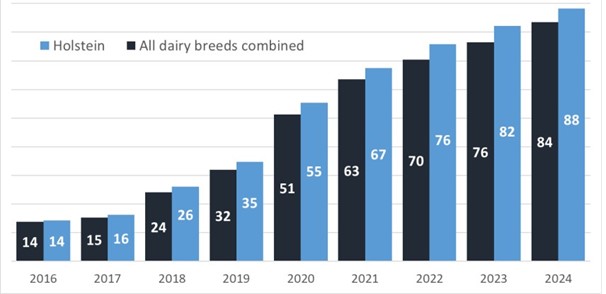
Figure 1 – Proportion of Holstein and all dairy breed semen which is sexed (dairy) in Great Britain (AHDB)
This is helping to eliminate the birth of “bobby calves” which were once such a threat to the UK dairy industry, and continues to be a reputational risk in countries who haven’t adopted sexed semen as quickly.
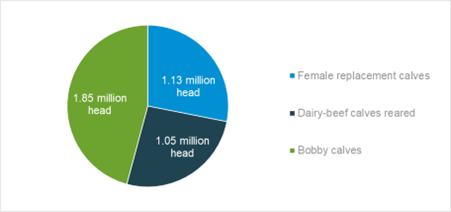
Figure 2 – Estimated route for calves born on dairy farms in New Zealand, 2024 (RaboResearch 2025 via AHDB)
With more dairy replacements coming from fewer cows, there has also been a swing towards the use of beef semen in the national dairy herd. Since 2021, there have been more beef-on-dairy calves born out of the UK dairy herd than dairy-bred calves.
Beef X cross calves are a valuable additional income stream for dairy farmers, with prime stock deadweight prices still topping £6/kg. However, there remains a significant difference in value between male and female calves.
Male beef X calves:
- Grow faster
- Convert feed more efficiently
- Finish 30-60 days earlier
- Produce heavier, more consistent carcasses
It’s no surprise that demand is higher; calves are easier to get sold off the farm; and males typically sell for £70–£100 per head more than equivalent heifers (depending on breed and market conditions).
Male-sexed beef semen is increasingly being viewed as a chance to increase the proportion of beef calves that are born as more valuable males. However, a carefully planned approach is required to compensate for the lower conception rates which are seen with sexed compared to conventional semen.
The quality of sexed semen available has increased dramatically over the past decade, but aspects of the cell-sorting technique and the lower number of sperm cells in each straw make sexed semen a less robust product. It’s important to target use at more fertile animals:
- First and second lactation animals that are genetically less desirable for producing dairy replacements
- First or second services after calving, prioritising later services for more fertile semen like conventional beef or triple-mix
- Stronger heats from cows without history of reproductive issues
- Herds using a mating programme and/or genomic testing can target sexed male semen at cows with poorer overall genetic merit, but with high genetic fertility.
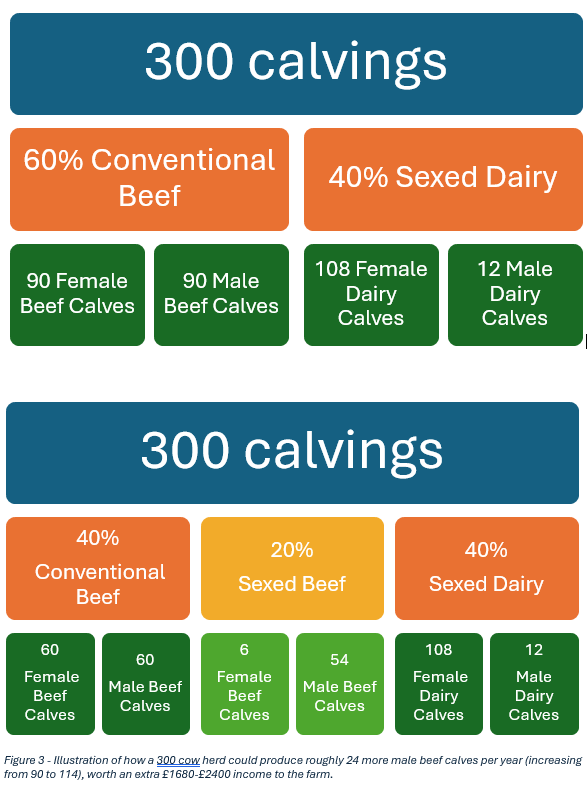
Overall, the aim is for a something approaching a roughly 40 / 20 / 20 split of semen used across the herd:
- 40% sexed dairy genetics
- 20% sexed male beef genetics
- 40% conventional beef genetics
Using this spread across a 300-cow dairy could generate between £1,680-£2,400 additional income per year from calf sales alone (~24 males born male rather than female).
All in all, sexed beef semen has a place in the breeding plans of dairy farms, but should be approached with caution to get the benefits with minimal impact on herd conception rates.
In next month’s newsletter: Rob identifies his top tips for getting the best conception rates from AI using when using sexed semen.




Leave A Comment