
By Nat Parker
I was doing some drying off for a client and discussing how well they were doing with having majority fitting the protocol for using just sealant, from the data on individual cow mastitis cases and low cell counts.
As I started drying off the cows, I noticed how good these cows teat ends were, so this prompted another discussion on how milk machine maintenance has such an influence on cows teats and the correlation between teat end damage and mastitis.
Any milking machine that is not working properly can damage blood vessels in the udder and cause hyperkeratosis at the teat end, which can limit the cows defences against bacterial infections. The bacteria will enter the teat as the sphincter muscle that normally closes the teat, if damaged will be compromised and so bacteria can travel up the teat canal into the udder. In some cases, the damage to the sphincter muscle is so severe the teat end may not close completely at all.
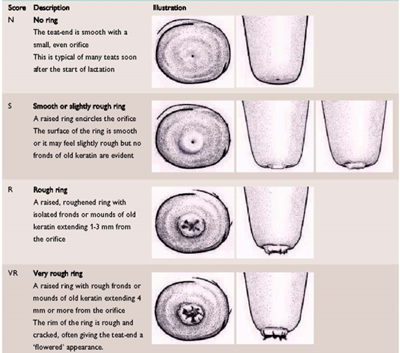
Teat end scoring chart
To check your herd status spending a milking checking the teats using the score sheet above is a good way to see if you have an issue.
If more than 20% of teats or more show abnormalities, try to find out what could be causing this – areas to check could be vacuum and pulsation irregularities, worn teat cup liners, overmilking due to incorrectly adjusted ACRs at the end of milking meaning the unit is being pulled off still under vacuum or poor milking routines especially for milk let down, putting the unit on before the cow is ready for milk let down.
Milk machine testing
Check with your milk machine manufacture for specific timings and the company you get your cup liners from will tell you (usually on the packaging) how many milkings between changing, this is very important to know and important you contact the supplier explaining your type of parlour how many cows you milk and how often for example 2 or 3x a day to get a accurate timing.
Ensure your parlour runs efficiently and protects udder health by following a strict maintenance schedule. Conduct daily checks for vacuum leaks and clean air admission holes, wash the milking plant at the correct temperature every milking, and replace liners and pulsator tubes to the manufacturers approved schedule for your system.
Schedule comprehensive, independent dynamic and static tests at least twice a year.
LLM vet techs can help by doing a teat end scoring check on your herd during milking saving you time and giving an independent report.





Leave A Comment