It was great to see the Wainwright family profiled in Farmers Guardian recently, talking about the calf health turnaround at The Sycamores. It’s a project we’ve been involved in from the start, working alongside George as well as the family and MSD Animal Health.
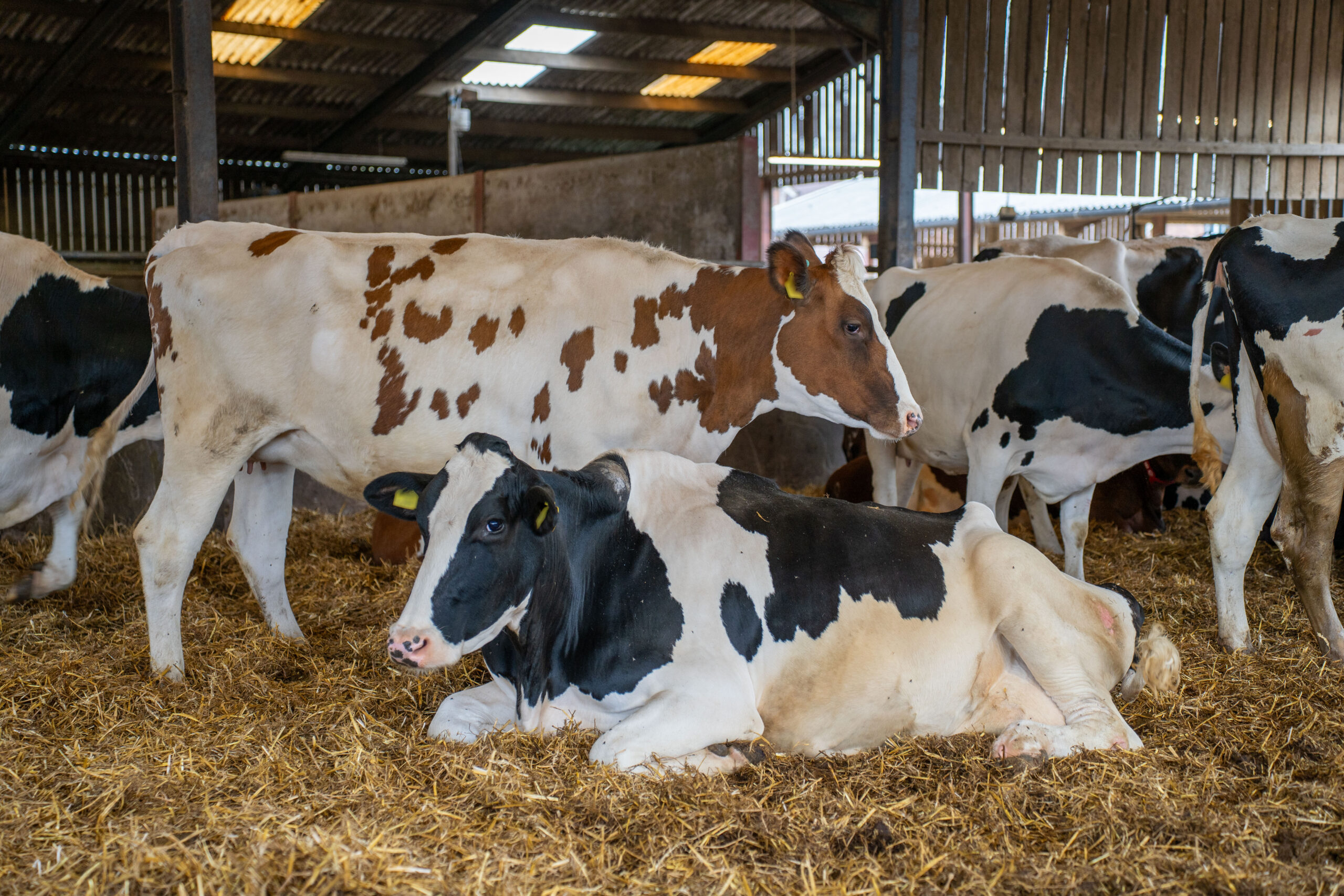
The Wainwrights run 220 pedigree Holsteins alongside a handful of Dairy Shorthorns and Guernseys at The Sycamores near Ellesmere, calving with an autumn bias. Despite already vaccinating against the usual respiratory suspects – BRSV, PI3 and IBR – calves were still coming down with pneumonia in batches. Some groups sailed through while others were left under the weather, needing antibiotics and anti-inflammatories just to keep going and never quite thriving. One batch in January 2025 was hit particularly hard.
Getting to the bottom of it
When we carried out nasal swab testing on the calves, the results pointed to bovine coronavirus as the missing piece of the puzzle. It’s a virus that’s easy to overlook, but it’s now recognised as one of the most common causes of respiratory disease in UK calves, and testing across the country suggests the vast majority of youngstock have been exposed to it at some point.
Once we knew what we were dealing with, George was keen to see the impact of vaccination for himself and took part in a trial alongside MSD Animal Health, vaccinating half his calves against bovine coronavirus with Bovilis Nasalgen-C in their first week of life, alongside their existing intranasal cover. The other half went unvaccinated for comparison. As part of the trial, our tech team carried out youngstock health checks, including weighing which wasn’t something they had done before but have continued because they found the data very useful.
The results
The difference between the two groups was stark. The vaccinated calves came through with barely a snuffle, grew on well and needed very little input. The unvaccinated calves continued to struggle, with knock-on effects on growth rates, and sadly some beef calves reared on the family’s Macclesfield unit were lost to the disease between nine and twelve months old. Vaccinated beef cattle, by contrast, went through to store age without needing a single antibiotic treatment, a real win for both animal welfare and responsible medicine use.
Important to note that the vaccination trial was only part of the picture. Alongside it, the Wainwrights have overhauled their colostrum routine, now testing quality and making sure every calf gets enough, early enough, with tube feeding on hand for anyone who needs it. Calf jackets have gone on to help youngstock hold their body temperature, and we’ve worked with George to correct an iodine shortfall in the cows following some stillbirths. A new purpose-built calf shed, with proper ventilation and drainage had just been completed (following the end of the trial).
The difference has been felt right along the chain, from the calf shed at The Sycamores through to the beef unit near Macclesfield, with easier, healthier calves and a lot less time spent treating sick ones. Off the back of it, the whole herd will be vaccinated against bovine coronavirus this autumn.
It’s been a pleasure working alongside George and the wider family on this, and a great example of what can happen when testing, vaccination and management changes are tackled together rather than in isolation. If pneumonia keeps cropping up on your farm despite doing all the right things, it may be worth talking to us about what else could be at play. Sometimes the answer is a virus you haven’t tested for yet.
Farm facts
- 220 pedigree Holsteins plus Dairy Shorthorns and Guernseys
- Yielding 10,000 litres at 4.2% butterfat, 3.3% protein
- Autumn block calving
- Beef cross calves reared to store at 14–15 months on the family’s Macclesfield unit
- Supplying Müller on a Co-op contract
- 65 hectares owned, 40 hectares rented
With thanks to MSD Animal Health, our trial partner on this project, and to Farmers Guardian, where the Wainwrights’ story was first featured.



Leave A Comment