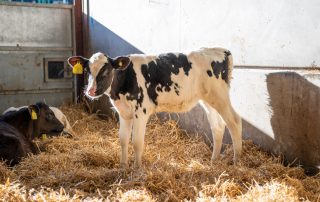
6 easy wins for stronger calves this winter

Off the back of our calf conference, here are a few tips that will hopefully make calf rearing a little easier for you this winter:

1.Feed quality milk in the right quantity

  • Good quality milk powder: making sure you feed dairy proteins to younger calves is essential as they can’t use […]
2025-12-10T14:50:25+00:00December 10th, 2025|Beef, Dairy, Infectious Diseases|

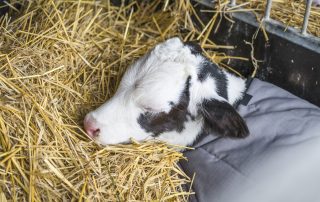
Protecting Calves from Pneumonia: Tackling Environmental Challenges and Supporting Immunity

As the colder months set in, pneumonia remains one of the most common and costly diseases affecting young calves. It’s a complex condition often caused by a mix of viruses and bacteria, but the environment plays a huge role in allowing infection to creep in. Understanding and tackling these environmental […]

2025-11-14T14:16:03+00:00November 14th, 2025|Beef, Dairy, Infectious Diseases|

Botulism in Cattle: What Farmers Need to Know

Botulism is a serious and often fatal disease affecting livestock. It is caused by toxins produced by the bacterium Clostridium botulinum, which is commonly found in soil and decaying material. These toxins affect the nervous system, leading to weakness, paralysis, and in many cases, death. While rare, outbreaks in the […]

Bluetongue Update – June 2025

With temperatures rising and movement restrictions easing across England, the risk of new Bluetongue cases this summer is increasing. There have also been important updates to movement rules and control measures across England, Scotland and Wales. Read on for a summary of what’s changed, and what it means for you […]

Implementation of Mandatory BVD Control in England: A New Era for Livestock Health (2027)

You may have heard on the grapevine that BVD testing is to become mandatory in England from 2027 – we have seen this coming for a while. Bovine Viral Diarrhoea (BVD) leads to significant economic losses for farmers due to reduced productivity, poor reproductive performance, and increased susceptibility to other […]

2025-07-16T09:02:02+00:00July 16th, 2025|Beef, Dairy, Infectious Diseases, Management, Youngstock|

Bluetongue Virus Serotype 3 (BTV 3) in the UK and Europe: A Growing Concern

Bluetongue virus serotype 3 (BTV 3) has recently caused significant disruption to ruminant health and welfare in both the UK and Europe. Over the past 18 months, the UK has confirmed 247 cases of BTV 3, with the majority concentrated within the restriction zone, which currently affects the East and […]

2025-04-03T15:54:14+00:00April 1st, 2025|Beef, Dairy, Infectious Diseases, News, Sheep, Youngstock|

Auxillary TB Testing Methods

The TB skin test (the single intradermal comparative cervical tuberculin test or SICCT) is officially quoted as having ‘specificity’ of 99.98%. This means that false positive results only occur once in 5000 tests. Conversely the ‘sensitivity’ of the test is much lower, in the range of 50-80% at standard interpretation, […]

2024-12-10T16:08:29+00:00December 10th, 2024|Beef, Dairy, Infectious Diseases|

How to Stay One Step Ahead of Infectious Diseases

Recently, having spent a few days helping out with the national disease surveillance and control efforts in East Yorkshire I gained a greater appreciation of the level of surveillance and monitoring of exotic and notifiable animal diseases that goes on behind the scenes in the UK. Whilst infectious diseases are […]

2024-12-10T15:55:38+00:00December 10th, 2024|Dairy, Infectious Diseases|

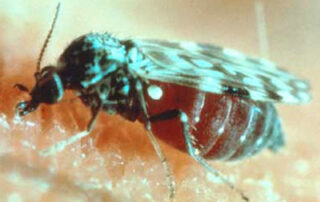
Vector-borne diseases: Bluetongue and Schmallenberg!

Rob Hall gives an update on two important diseases, both of which are spread by biting midges and are currently causing issues in the UK.

Bluetongue Virus

Bluetongue is an infectious viral disease, which was first detected in the 1700s. It is widely found in many parts of North Africa […]

2024-02-07T15:42:29+00:00February 7th, 2024|Beef, Dairy, Infectious Diseases, Sheep|

Suspect winter dysentery

Winter dysentery is an uncommon but highly infectious viral disease in cattle which is difficult to confirm through diagnostic testing. It’s a form of bovine coronavirus, with symptoms including profuse, watery diarrhoea, dark brown in colour and sometimes containing blood. Milk yields of infected cows will show a rapid and […]

2023-02-03T08:53:00+00:00January 4th, 2023|Dairy, Infectious Diseases|
Go to Top