
By Kate Brocklehurst
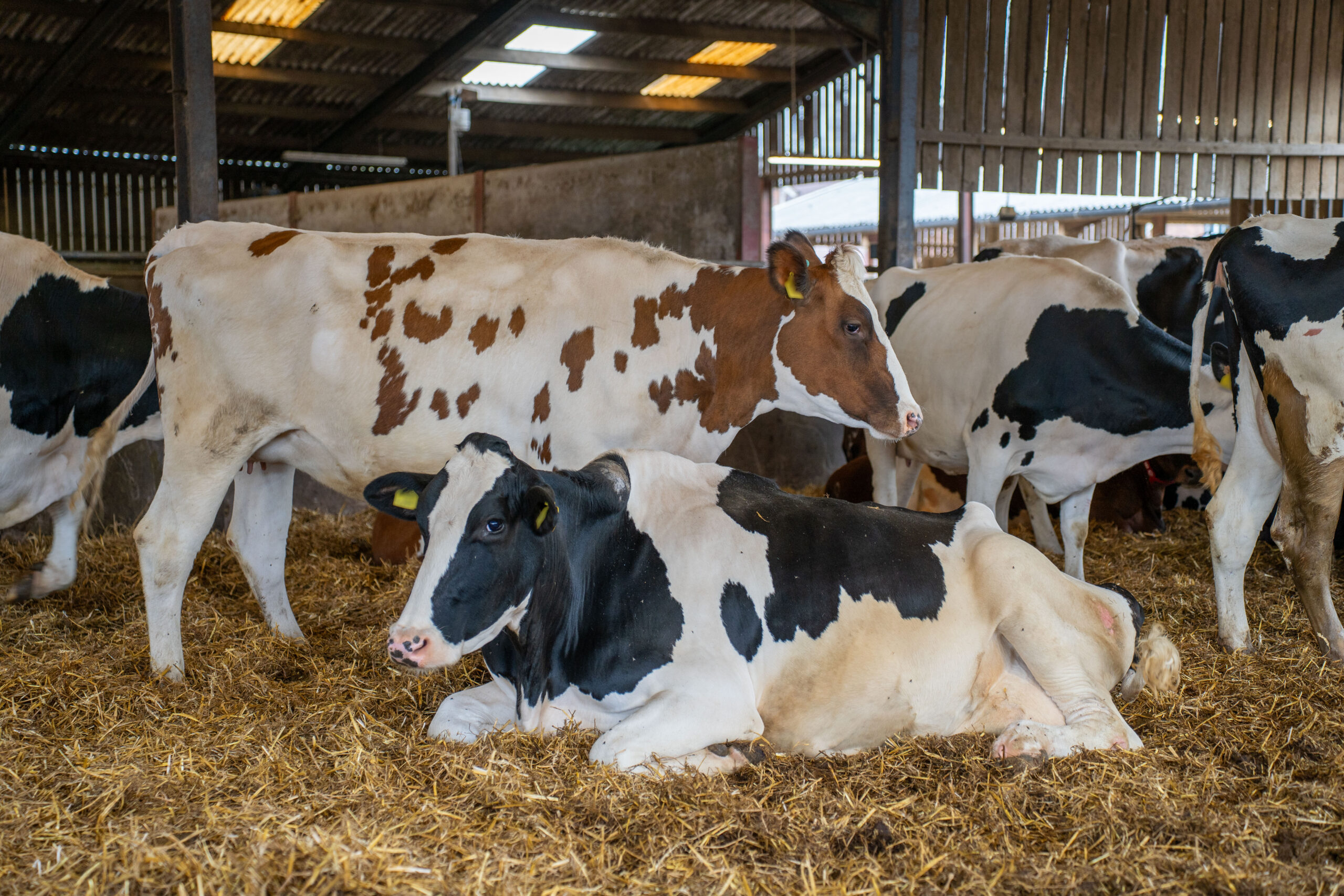
Over-conditioned cows are among the main culprits for transition-related diseases, including milk fever, retained foetal membranes, metritis, mastitis, ketosis, and LDAs. So how can we better support these cows into a successful lactation?
Around calving, dry matter intake declines below that needed to satisfy energy requirements, meaning cows often enter a period of negative energy balance (NEB). This period predisposes cows to both metabolic and infectious disease – to minimise this risk, cows should calve at the correct body condition score (BCS). Remember, fat cows eat less and therefore suffer a greater deficiency of energy.
Ideally, cows should both be dried off AND enter the following lactation with a BCS of 2.5–3.0. Fat mobilisation rates are higher in over-conditioned cows, twin-bearing cows, and appetite-suppressed cows (for example, sick or down cows). Increased fat mobilisation is strongly associated with higher rates of transition disease as immune function is reduced.
Mobilised fat is processed through the cow’s liver. Fat that is not used for energy should be exported from the liver using very low-density lipoproteins (VLDL’s). However, VLDL export capacity is often limited after calving, causing fat to accumulate within the liver and resulting in ‘fatty liver syndrome’. Fatty liver negatively impacts both milk yield and overall health status.
Reducing hypocalcaemia is also important, as low calcium levels lower rumen and abomasal motility and therefore further reduce feed intake. Low calcium also increases the risks of metritis and mastitis, even at a subclinical level. Strategies should be implemented during transition and around calving to reduce milk fever. These may include:
- A well-balanced DCAD transition cow diet – these can be either ‘full DCAD’ or ‘partial DCAD’ diets, depending on what salts are added to the ration. They can work very well but careful formulation and monitoring is needed, otherwise they can go badly wrong!
- Inclusion of a calcium binding product in the transition cow diet such as Xzelit – this strategy works well but is relatively expensive
- Appropriate calcium supplementation around calving – either in the form of boluses (such as Bovikalc) or solutions of calcium. This strategy is still popular for older cows in lactations >=3
- Targeted transition cow support, which can include adding choline to the transition diet for 2-3 weeks before calving
What is Cholevite?
Cholevite boluses contain rumen-protected choline and methionine.
Benefits of Choline
- Supports liver metabolism and helps protect against fatty liver
- Reduces the risk and severity of ketosis
- Improves glucose availability
- May improve milk yield and early lactation performance, particularly in over-conditioned cows
Benefits of Methionine
- Supports methyl donor metabolism, hepatic lipid metabolism, DNA methylation, and epigenetic regulation
- Contributes to antioxidant defence
- Supports immune and inflammatory regulation
- Assists hepatic function and VLDL synthesis, helping reduce fat accumulation in the liver
How Should Cholevite Be Used?
- During periods of increased fat mobilisation risk, feed rumen-protected choline during the transition period up until calving. Examples of these periods may be when the cows are over-conditioned (long lactations or dry periods), when the dry period accommodation is heavily stocked or when weather conditions are unfavourable e.g. heat stress
- At calving, administer two Cholevite boluses (or alternatively one Cholevite and one Methionine bolus). This provides: 15.8 g rumen-protected choline and 1000 IU vitamin E per day for five days
- Targeted use in individual sick cows as an adjunct to other treatments, for example; following correction of displaced abomasum, or alongside propylene glycol treatment for ketosis



Leave A Comment