
By Rob Hall
Sexed semen use has rocketed over the past decade. Its use can boost the proportion of female dairy calves born (producing more replacements from fewer cows) and can skew the gender-balance of beef calves towards the more valuable male calves. However, sexed semen needs using carefully to get the best results.
When used well, the conception rates from sexed semen are comparable to that of conventional semen. Published figures, including a large 2022 Irish dataset from ICBF, put recent sexed semen at 95% the conception rate of conventional AI (60% v 63%).
Unfortunately, this dataset also highlights the risks of using sexed semen. While the best 10% of herds achieved 73% conception rate, the worst performing herds only got 40% of their cattle pregnant! Disappointing results can be enough to put farmers off sexed semen, so it’s important to identify why results vary and how to avoid the common pitfalls.
Modern sexed semen
The quality of sexed semen has improved as the cell sorting technology has been refined over time. This includes tweaks to the semen “extender” fluids used which prolong the cells’ lifespan, and inclusion of more sperm cells per straw (most straws now contain 4 or even 6 million sperm cells, up from 2 million a decade ago). Semen sorting labs have more experience with the sexing process, and their entire production process now revolves around sexed semen.
The results speak for themselves, with published field trials backing up real-world experience. ST Genetics’ research back in 2016 showed better conception rates with their newer sorting techniques / fluids, and when 4 million cells were included, their results matched conventional semen. Crucially, 4M or 6M outperform straws with only 2 million cells.
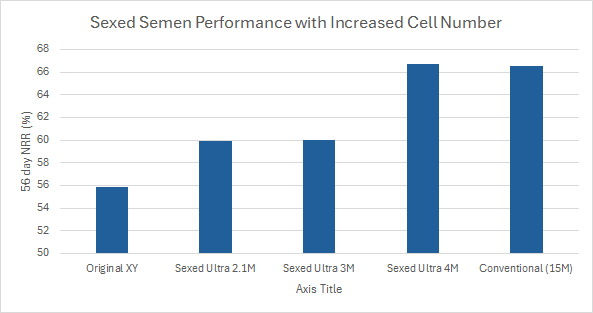
Figure 1 – Modern sexed semen with 4 or more million cells gives pregnancy rates comparable to conventional AI (from Lenz et al 2016)
Timing is everything
As sperm cells travel through the female reproductive tract and into the fallopian tube, they undergo the process of capacitation, preparing the head of the sperm to bind with and fertilise the egg cell.
Conventional semen is frozen quickly after ejaculation, whereas sexed semen requires longer processing before freezing. The capacitation process is kick-started, and the sperm cells are further along their lifespan.
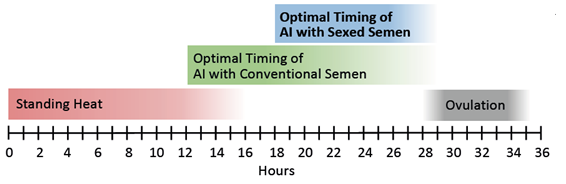
This means we should adjust the timing of insemination to compensate for sperm cells which will be active sooner and die off quicker. Compared to conventional semen’s 12-hour interval between heat being detected and insemination being performed (the AM:PM rule), sexed semen inseminations should occur closer to 14-24 hours after onset of standing heat. I suggest 18 hours after the start of heat, as an easy number to work with.
Users of heat detection collars or pedometers have an advantage here, as their software gives an optimum timing window for sexed insemination.
Figure 2 – AI with sexed semen should be timed slightly later than conventional, typically around 18 hours after the start of standing heat (from Thomas and Anderson 2022)
Pick your battles (and best cattle)
Sexed semen is the obvious option for your best cows – aiming to get replacements from them. Generally, it’s recommended to target its use at younger and more fertile cows. There’s an argument for avoiding high yielding cows, but those are probably the ones you want daughters from!
Maiden heifers are a great starting point as:
- They are your best / newest genetics, and
- Breeding future replacement heifers from your heifers will result in the quickest rates of genetic gain.
- Heifers also have a ‘clean slate’ in terms of health and calving related issues, an
- They are the most fertile and can have the best conception rates when sexed semen is used correctly.
- But, they need to be well grown and cycling normally!
When you’re picking which animals from the milking herd to breed, focus on:
- Cows with no history of transition disease this lactation – particularly reproductive conditions like retained placenta; endometritis (“whites”), or cystic ovaries
- A clean bill of health – no chronic health conditions like lameness, Johnes or high cell count
- Younger cows (1st or 2nd lactation)
- Those with higher genetic fertility, or a history of conceiving quickly
- Cows which are 60+ days calved
- Strong heats – confirmed with activity monitors, chalks or scratch cards. Because we’re aiming to serve later into the heat period, scratch cards should be well rubbed.
- Sexed semen only for the first & second services of the lactation, then move onto beef or conventional semen to prioritise getting the cow pregnant.
Semen Handling
Storing and thawing semen correctly is always important for optimising results; and is especially important for the more delicate sexed semen. We’re aiming to maximise the number of live cells available in the reproductive tract to fertilise the egg.
The act of insemination the cow needs to be done properly, but the prep work is just as important to get right. My top tips are:
- Use a map / chart of your semen tank – know where your straw is before you start
- Minimise the time the straws are in the neck of the flask – using the frost line as your guide. If you need the canister above there for more than five seconds, lower in back into the nitrogen for ten seconds before trying again.
- Use tweezers, never fingers to handle straws – warming straws even temporarily damages the cells
- Stick to recommended thaw guidelines – I defer to the semen companies here! For Cogent’s SexedULTRA 4M this is a minimum of 40 seconds at 37°C
- Always pre-warm the AI gun and sheath – semen doesn’t like temperature fluctuations
- Use chemise sanitaires for all sexed inseminations – especially important for cows which have had PRIDs or CIDRs as they will have some vaginal infection which affects conception rates
- Load one sexed semen straw at a time and keep the AI gun well insulated – again, helping to avoid temperature fluctuations
- Inseminate the cow within ten minutes of thawing the semen
Put all these pieces together and you’ll be all set of great performance with sexed semen. We’re always happy to help if your conception rates aren’t where you’d like them to be, and our on-farm “AI MOT” service can be a great way to refresh some of these potential pitfalls.
Key points
- Use better / modern sexed semen with more viable sperm cells
- Timings may need adjusting – serve later than conventional AI
- Pick more fertile and healthier cows / heifers
- Carefully handle semen during storage, thawing, and transport
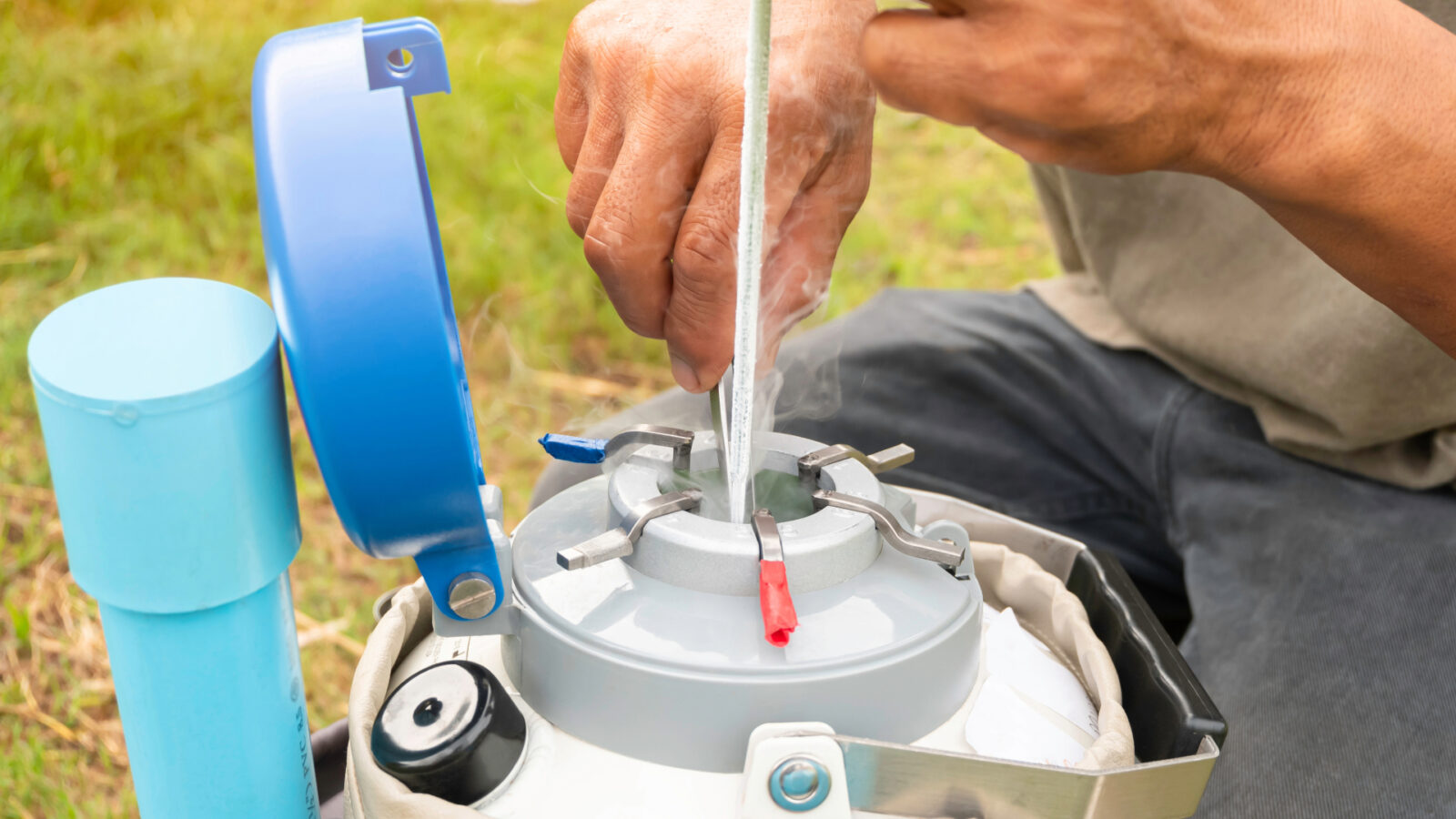
Figure 3 – Keeping straws below the frost line is a key part of effectively handling frozen semen (photo: University of Wisconsin Madison)





Leave A Comment