
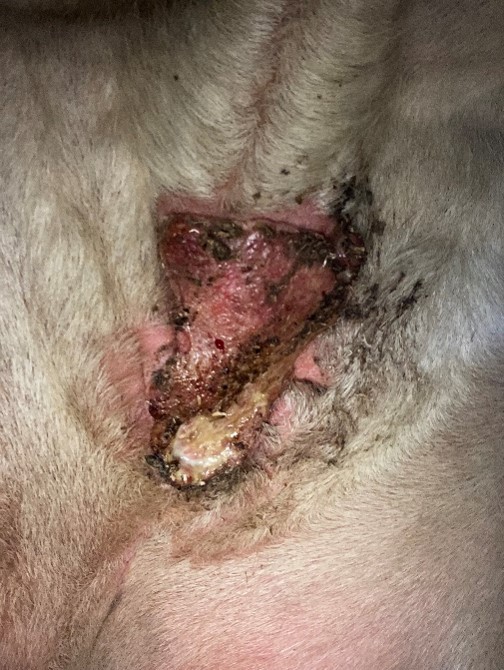
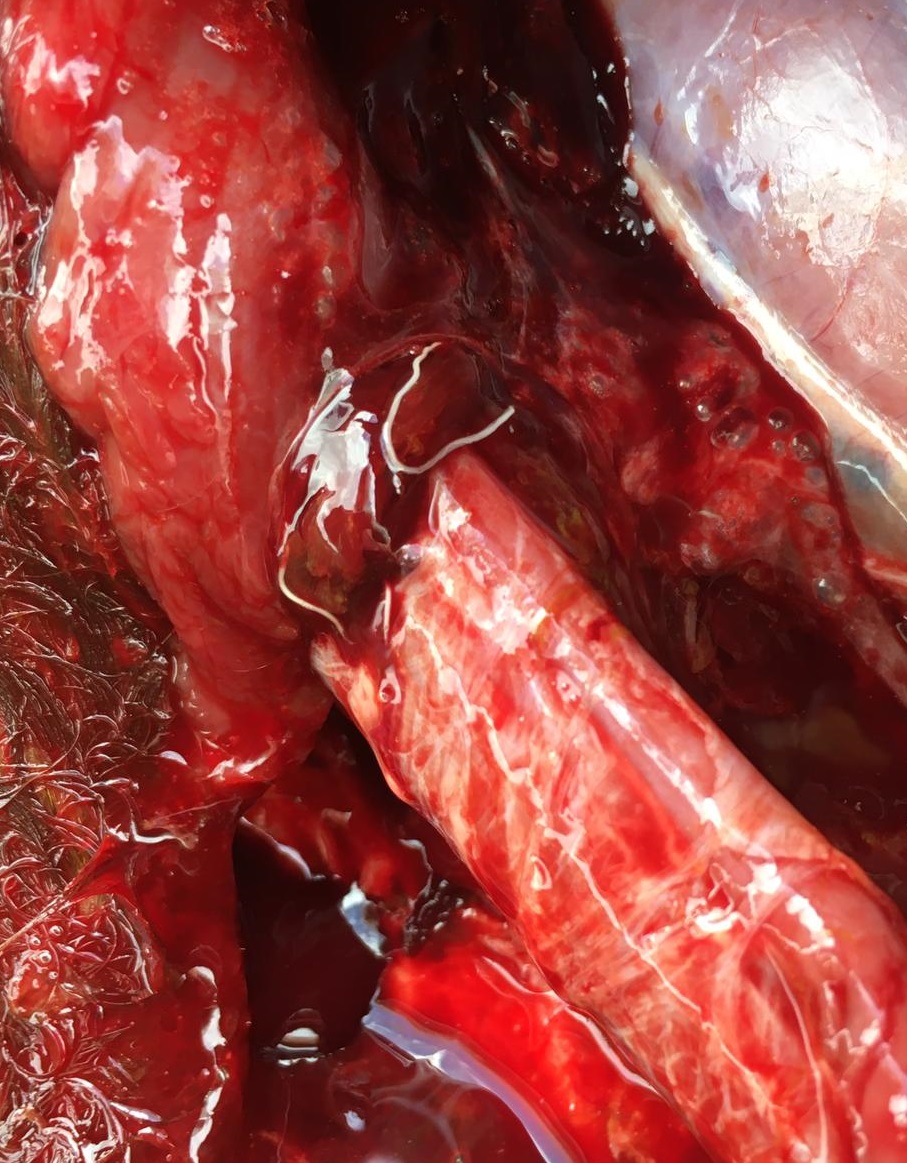
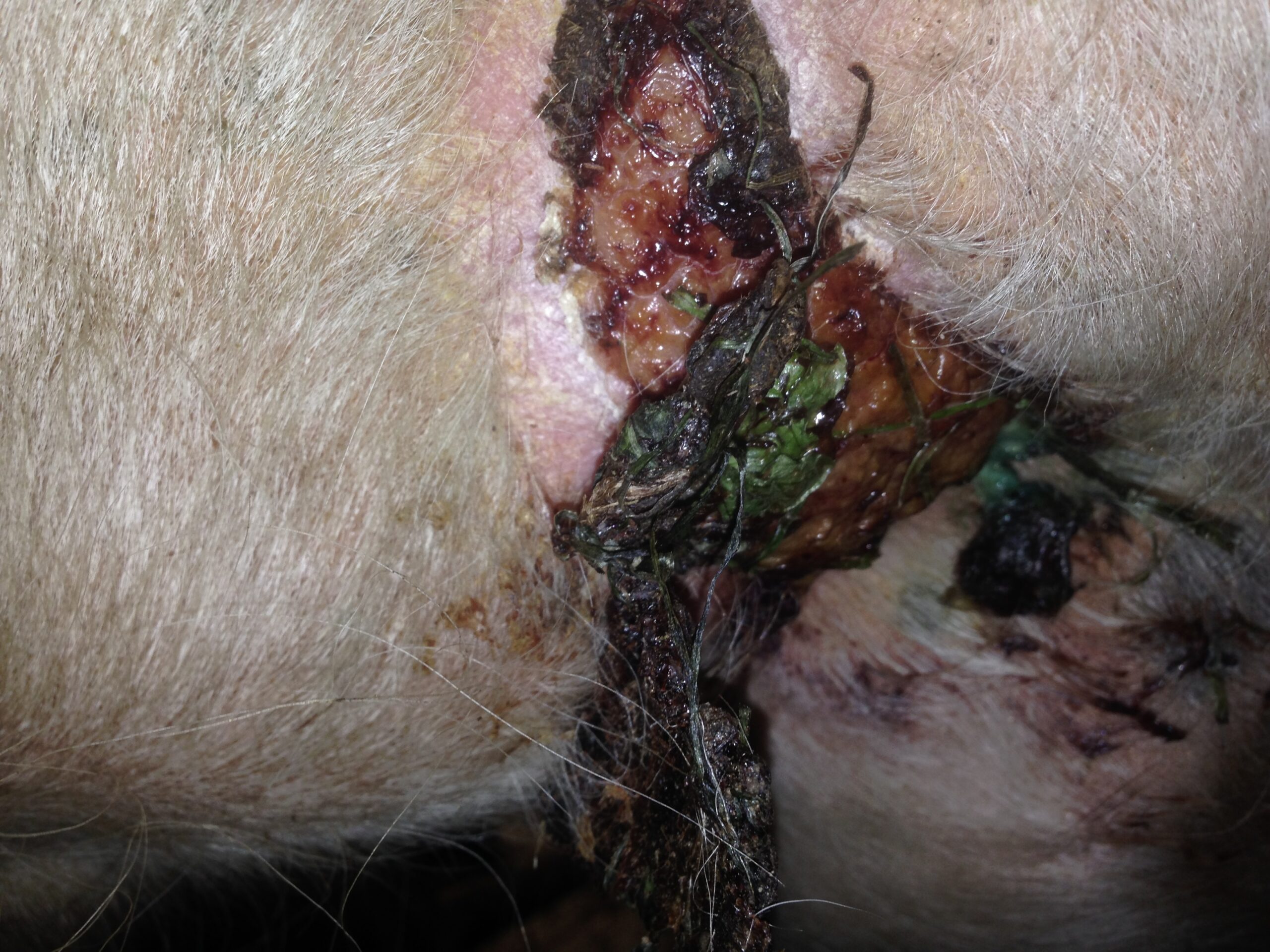
Nat and I recently presented the results of our study into Udder Cleft Dermatitis (UCD) in the UK at the British Cattle Veterinary Association congress in Newport, South Wales. UCD is an infection which occurs in the skin next to the udder and is frequently seen on dairy farms. In severe cases the bacteria can eat into the milk vein causing severe bleeding or spread to the lungs, leading to pneumonia. Despite sometimes being known as ‘udder digi’, UCD is not caused by the same ‘treponeme’ bacteria that cause digital dermatitis.
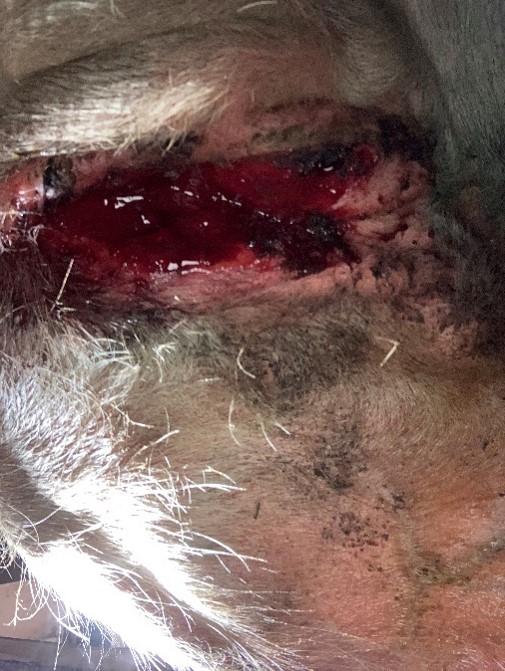
Examples of udder cleft dermatitis lesions. Most were at the front of the udder but they were also present in between the teats and, on a couple of farms, on the side of the udders.
Our study involved examining 8302 cows across 28 farms with an inspection mirror in the parlour. We found that over 10% of these cows had UCD, which was much more than most farmers expected as only the most severe cases are normally picked up. Interestingly, the prevalence varied greatly from 1.3% to 26% between herds which suggests that differences in the cows and their management have a big impact. To investigate, we recorded the body condition, cleanliness, and udder conformation of all the individual cows. On a herd basis we recorded various factors such as average yield, foot bathing procedures, milking routines (pre and post dip/spray) and housing comfort, hygiene and bedding.
We have finished crunching the numbers and have some interesting findings to report. The most significant finding is that, as expected, UCD is closely related to the conformation of the udder. Cows with a loose fore-udder attachment and a deep udder were around 4 times more likely to be affected than cows with a strong fore-udder attachment and a tight udder. Fortunately, both of these traits are available on bull proofs so it is possible to breed for better conformation and reduce the long term risk of UCD.
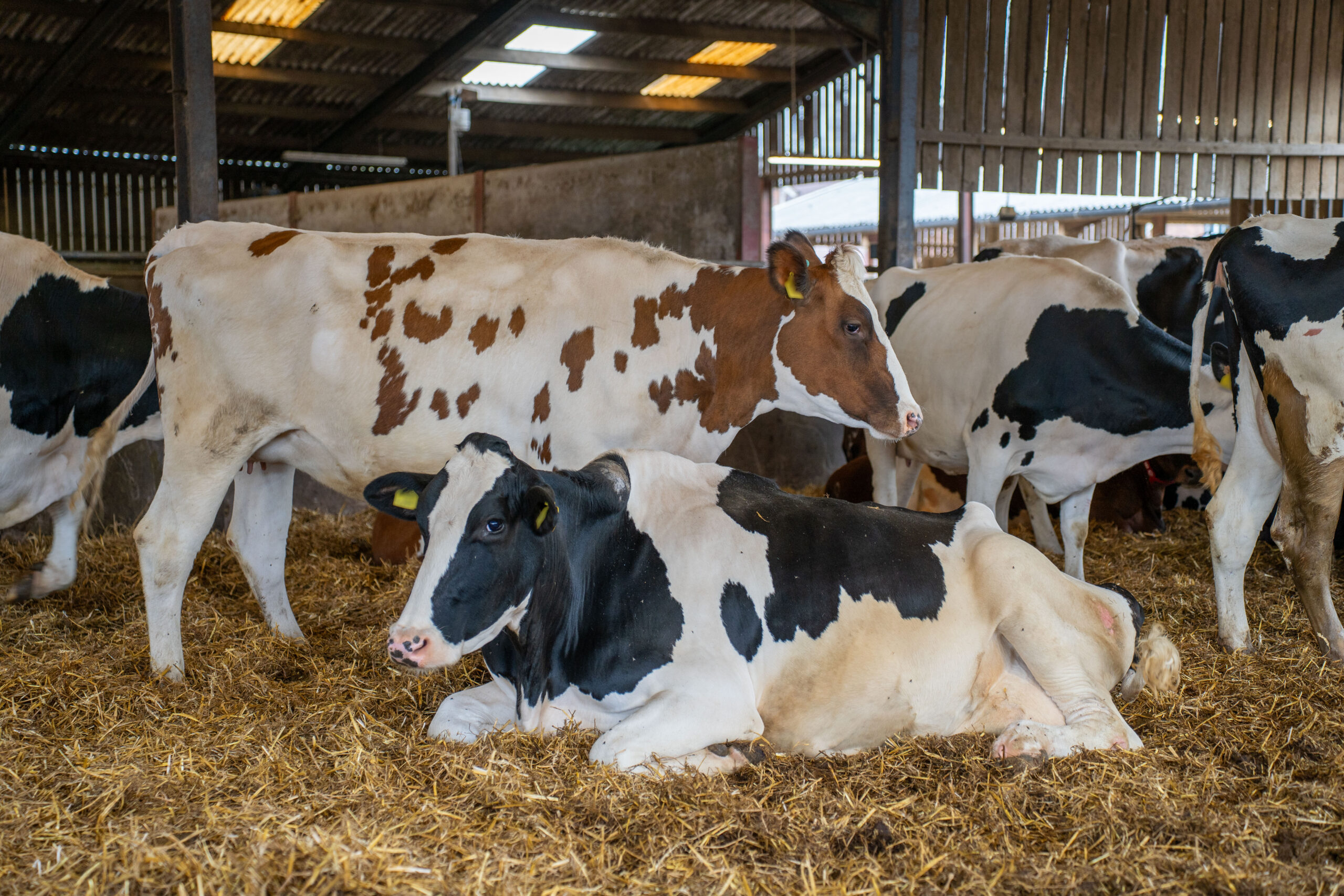
On a herd basis, cows bedded on sand were 2.8x as likely to have UCD than other bedding types. This is likely to be because sand gets into the udder cleft and causes abrasions which then become infected. Sand is both comfortable for cows to lie on and inert which reduces bacterial growth. As such, it is the optimal bedding material for preventing both lameness and mastitis and we would not advise you against using it. However, we believe that good drainage and ventilation are important as the sand is more likely to stick to damp skin than dry skin.
We also found that cows on farms using automatic scrapers were 2.5x as likely to have UCD. We think this is due to contamination of the feet with the wave of slurry created by the scraper. This then creates a wet, dirty environment around the udder cleft when the cows lie down. Use of robotic scrapers or ’poo hoovers’ are one option to help keep the cows cleaner and will also be beneficial for controlling lameness and mastitis.
We have also been testing out a topical gel treatment called NoBacz to assess its effectiveness against UCD. The more severe lesions are proving difficult to fully cure but we have seen a good improvement in the smell and discharge. These cows may require ongoing treatments until they can be culled from the herd. Like with most conditions, the key is to identify the problem at an early stage when treatment is more likely to be effective. This can be done in the parlour with an inspection mirror and is a service that our vet tech team can carry out for you, often at the same time as doing a mobility score. Treatment of milder lesions and follow up treatment of the more severe cases can be carried out in the parlour. Please contact us if you would like more details.
Finally, a massive thank you to the 28 farms (picked at random) who assisted us with the initial research as well as those who have helped with our treatment trials.





Leave A Comment