Luckily for many, having surgery on a farm is a rare occurrence, and having an animal put under general anaesthesia is even rarer! However, in August, we had the opportunity to provide one of our Derbyshire clients with this service. Thanks to the relationship our Derbyshire branch has with the University of Nottingham, I had the opportunity to assist resident vet Mascha Sohrmann to perform a hernia repair on a 5-month-old calf, whilst anaesthesiologist Florence Hillen ensured the calf’s safety under anaesthesia throughout the operation.
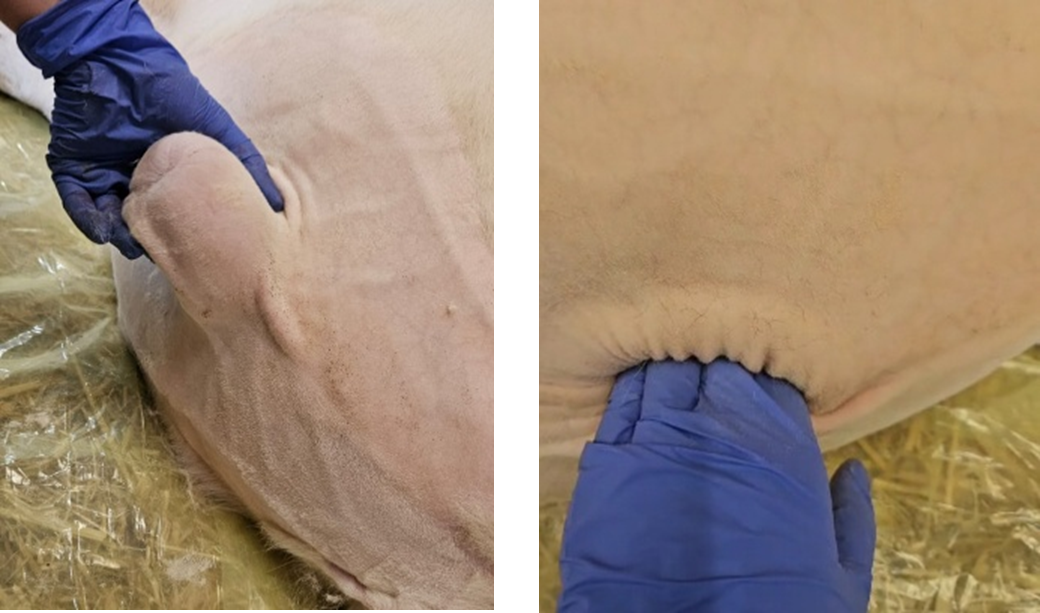
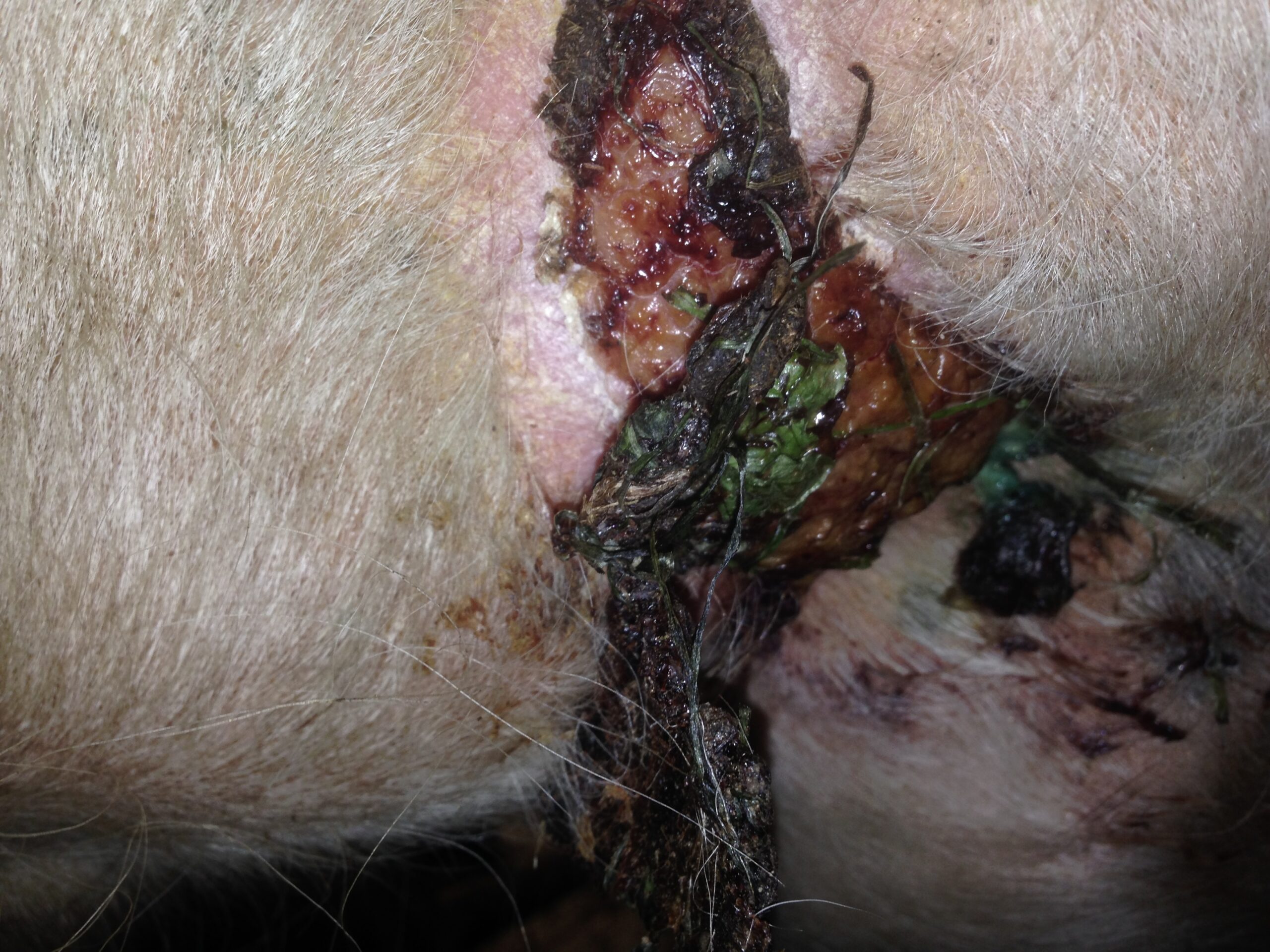
Pictures 1 and 2 – Photos of the hernia before the operation.
What is a hernia, and why is it an issue?
A hernia is a condition often identified in calves as a swelling on the base of the abdomen that consists of abdominal contents. The most common type of hernia is an umbilical hernia that occurs when there is a failure to close the umbilical ring after birth.
If the hernia is small, the abdominal contents can become trapped outside the abdomen in the hernia ring (incarcerated), which is an emergency and requires immediate correction.
Larger hernias that do not pose the risk of incarceration are associated with penetrating wounds through the skin and into the abdominal contents.
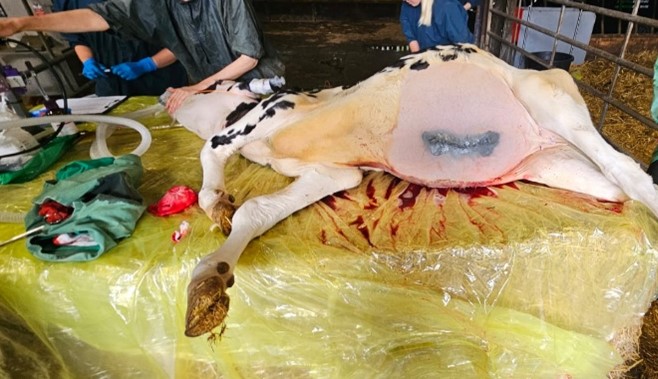
In this case, to prepare the calf for surgery, an IV catheter was placed so that we could administer the induction agents, which would help keep the calf still for us during the procedure. This cocktail of drugs consisted of Ketamine and Butorphanol. After she was induced, an ET tube was passed down her throat just like it is done for small animals and us when we go for surgery! This allowed us to ensure she had enough oxygen during the surgery and use anaesthetic gas to ensure she stayed unconscious during the surgery. We then manoeuvred her onto our makeshift surgical table (a straw bale kindly donated by the farmer), where she was clipped and scrubbed ready for surgery. An oval-shaped incision was made around the hernia, and the skin was bluntly dissected away from the muscle layers beneath. A large amount of tissue was removed to allow access to the hernia so that we could close it. A small amount of tissue was then removed around the hernia ring to allow better healing of the hernia. Finally, the ring itself was closed using an inverted cruciate pattern, as was the skin.

Picture 3 – A photo showing how we administered anaesthetic gas to the calf.
Picture 4 – Photo of the calf after the surgery.
Why do hernias occur?
There are 3 main reasons hernias form in calves:
- Genetic factors
- Infections of the umbilical cord
- Trauma
Hernias used to be a more common finding on farms, but in recent years, we have managed to successfully breed the trait out of our herds. This has been achieved by breeding animals with a history of hernias to terminal beef sires.
Do we always need to operate on hernias?
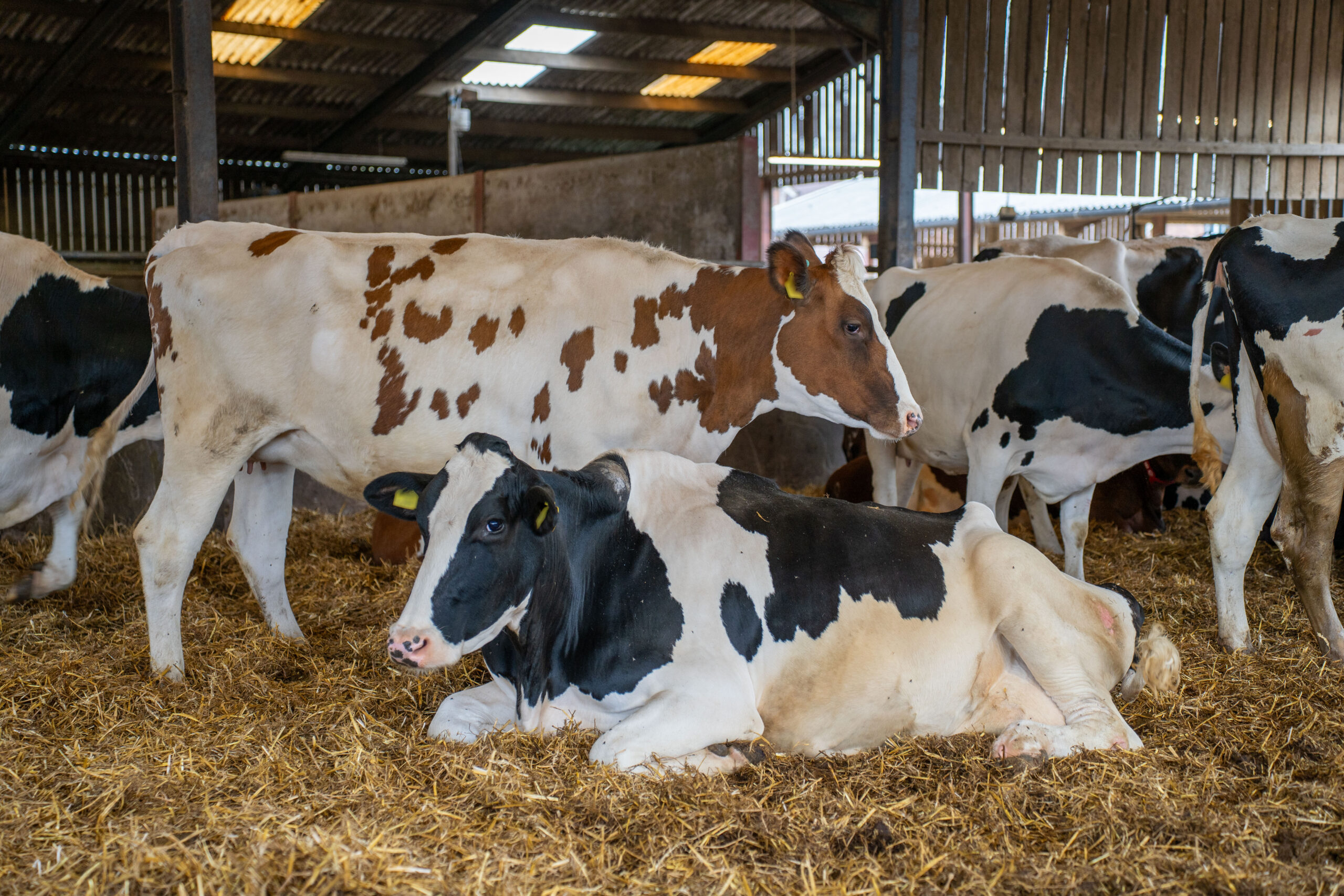
No – Some small hernias will close by themselves, but they do run the risk of becoming incarcerated in small calves, so it is always best to have your vet look at any animals you are worried about.
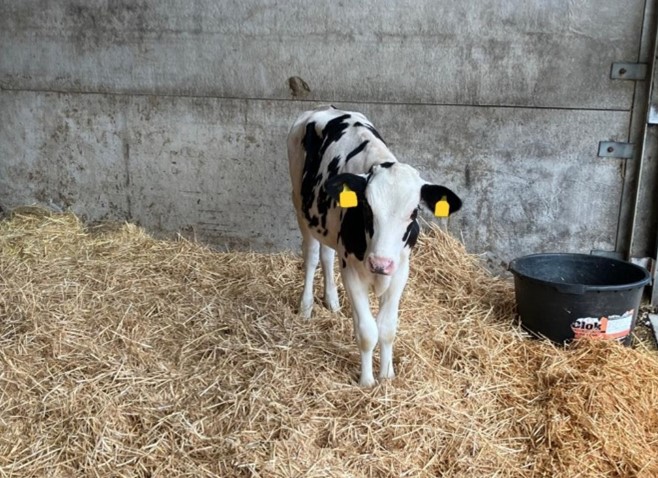
Picture 5 – Photo of the calf 2 weeks post op
After two weeks of TLC, she is looking well and ready to join the rest of her group again! If you have any questions about hernias or any other hereditary traits, do not hesitate to contact your vet. I am happy to answer any questions regarding this case through my email, which is [email protected]



Leave A Comment