
Calving is associated with profound metabolic changes which often lead to a combination of fatty liver, poor energy status, low blood calcium, reduced feed intakes and oxidative stress. These conditions adversely affect milk yield, cow health and increase the chances of premature culling.
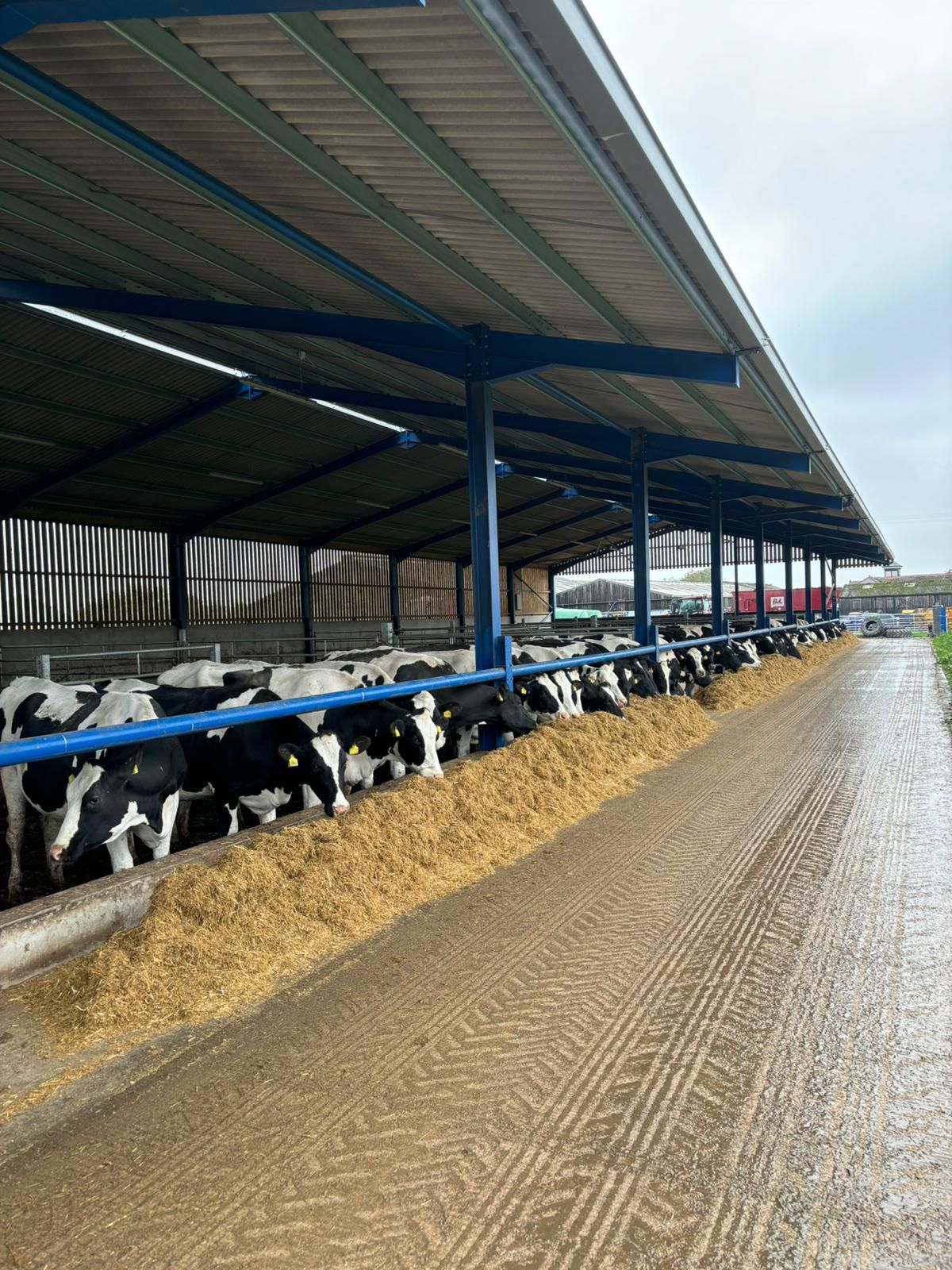
Blood testing cows after calving for calcium and energy status has become fairly common place in the last 10 years. However, testing for the sake of testing cannot be justified unless the results allow us to:
- Change the management of the cows so that subsequent calving cows calve in better or
- Make an intervention to the cow being tested so she performs better, either in terms of yield or disease susceptibility.
And, of course, any changes and interventions need to be effective and economically viable.
Several studies show that both calcium and energy status will strongly influence how a cow will perform in terms of disease and yield. Calcium status affects immune function, feed intakes and subsequent fertility. Studies have not shown a consistent negative association between poor calcium status and yields. This is probably because higher yielding cows tend to have a poorer calcium status in the first place; this observation could lead to the false conclusion that poorer calcium status leads to higher yields! However, high yielding cows that are struggling with their calcium status are prime candidates for cost effective calcium supplementation. Calcium supplementation through boluses and drenches has been shown to be very cost effective if the right cows are targeted, with the best economic return seen in lame cows and higher yielding cows.
The best way to control clinical and subclinical milk fever, so you don’t have to rely on too much post calving supplementation, is through restricting the potassium intake in the last weeks of the dry period right up to calving and ensuring magnesium status is adequate. This is relatively easily done using a combination of ‘safer’ forages-chopped wheat straw, whole crop cereals, maize silage, brewer’s grains and later cut grass silages that have been mineral tested. The magnesium is easily added through dry cow minerals or rolls and by adding magnesium chloride (approximately 100-150g per day) to the transition diet. If adequate control cannot be guaranteed using this method, then calcium binding agents e.g., Xilit can work very well but do carry extra cost.
What about energy status?
There is a good argument for testing all cows after calving (‘ketone testing’) to see if some sort of intervention is required. Some fat mobilization is inevitable after calving but excessive amounts increase disease risk due to oxidative stress and the negative effect this and ‘fatty liver’ disease has on immunity.
Cow side ketone tests that are calibrated specifically for cows are available and are cheap. The ‘ideal’ testing regime is at day 3 and day 7 if you intend to intervene on the basis of the result. A later testing window used to be recommended up to day 21 but this is usually too late to intervene, and this testing protocol was mainly aimed at estimating how much subclinical ketosis was present in the herd so that changes could be made to the transition and fresh cow management and ration.
What are effective interventions?
As with most things, the best way to maximise profitability and performance is by preventing disease (whether that’s subclinical or clinical). To maximise transition success the following should be considered:
- The condition score of the cows at dry off and calving (aim for 2.75-3 for Holsteins)
- Rumen fill of transition cows, target >4. More information available at https://ahdb.org.uk/knowledge-library/rumen-fill-score-card
- Feed space per cow- at least 75 cm
- Ration formulation and presentation. Maximising dry matter intakes is key.
- Grouping- ideally no changes for 3 weeks prior to calving and minimal afterwards to decrease social stress
- Bedded lying area of 1.25 m2/1,000 litres of milk/cow (herd annual milk yield)
- Loafing area 2m2/cow
- General cow comfort
Several feed additives have been extensively researched; the most well researched of all is propylene glycol which the cow can use to make glucose which is required for milk production and will be in short supply after calving. This is effective at doses of 300ml/day for usually 3 to 5 days. Calcium propionate can also be used by the cow to make glucose and has the added benefit of providing calcium too. This needs to be given at 400-500g per day.
A recent review paper looking at the most effective treatments for fatty liver concluded that consistent improvements were only seen if energy sources (propylene glycol) were given with choline. The choline acts as an antioxidant and helps the cow produce the transport protein that clears the liver of fat. An analogy is that the propylene glycol is the fuel in the tank of the car but unless the engine is running well, the car won’t run well. The liver is the metabolic engine of the cow and unless it is healthy immunity and milk production will be compromised. A meta-analysis published in the Journal of Dairy Science in 2020 showed rumen protected choline supplementation consistently increased milk yield (+1.6kg/day), ECM (+1.7kg/day) and reduced the risk of retained placenta and mastitis post calving. There is a substantial amount of research showing the consistent effects on choline supplementation on subsequent milk yields, where fed at greater than 12 g/cow/day.
How to supplement choline?
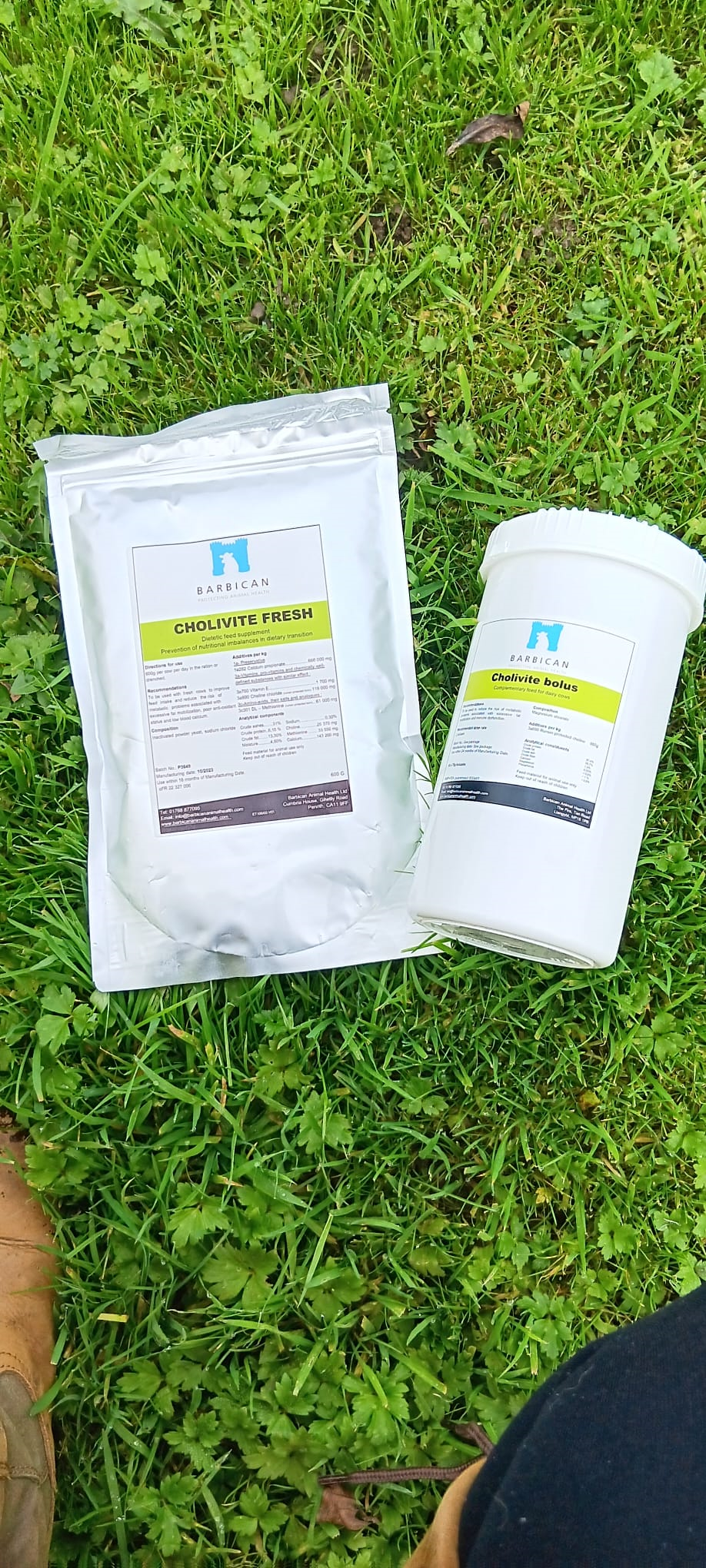
Choline can be supplemented in the transition ration to the point of calving, but unless a herd has a fresh cow group it can’t be supplemented post calving without giving it to the whole herd. This will miss the most critical time for the cow as more fat is mobilized in the week after calving than the week before. The research showing positive benefits of choline supplementation on cow health and milk yield, has mostly been conducted with choline supplementation 21 days pre and 21 days post calving. The most cost-effective way to feed choline is in the TMR but for herds without a fresh cow group, targeted dosing post calving can be achieved using boluses. Trial work with choline boluses (Cholivite) has shown them to be most effective in terms of higher yields at the first recording when given:
- At or soon after calving to fat cows that carry a higher risk of excess fat mobilization. In the trial, bolused cows that were condition score 3.5 or above gave an average of 5 litres more milk at the first recording compared with similar cows that were supplemented.
- In conjunction with energy precursors post calving to cows that have subclinical ketosis to allow the liver to function more effectively.
- To sick cows post calving which will be mobilizing fat and be in poor metabolic health probably with other appropriate treatments depending on the disease present.
We stock choline boluses at LLM, along with sachets containing choline and calcium for treating sick fresh cows. Speak to one of the team for more information.






Leave A Comment