
Bluetongue (BTV) is a viral disease transmitted by biting midges, which affects all ruminants (e.g. sheep, cattle, goats and deer) and camelids (e.g. llama and alpaca). BTV is mainly spread by infected adult midges biting an animal susceptible to the disease.
An uninfected adult midge bites an infected ruminant animal taking in blood and the virus. The virus takes 4-20 days to replicate within the insect and moves to the salivary glands. The infected adult midge then bites an uninfected ruminant, transmitting the virus. This ruminant animal will be infectious within 2-4 days.
Infected midges can easily spread locally but can travel further in certain temperatures and wind conditions. Midges are most active at dusk and dawn, with their activity strongly influenced by the weather as they struggle to fly in high winds or rain. Average daily temperatures need to be above 15 degrees C for BTV to replicate within the midges. The second but less common way the disease is spread is through movement of infected animals which is why movement of animals from BTV areas is controlled.
The current strain is BTV-3 which has a higher sheep mortality (likelihood of death) than the BTV-8 strain which we had back in 2007. In the Netherlands they have been tackling Blue Tongue for the past year so listening to their experiences has been valuable. They found that of those sheep which were infected, 75% died. This equated to the death of 10% of the national flock. At the Autumn National Sheep Association (NSA) eastern counties meeting, pregnant ewes we found to be the most at risk of death from infection and there was an increased number of abortions.
Current situation
There have been 143 cases in England and 2 in Wales, 133 of which reside in the ‘Restriction Zone’ (RZ) that currently comprises of the Eastern counties and parts of Yorkshire. There have been 12 cases outside the Restriction Zone which have been culled and local area testing is in place to see if there has been spread.
There has been compensation for culled animals and going forward culling will only be used on individual animals in newly infected areas to help prevent any spread of disease. Once bluetongue is known to be circulating in the domestic midge population, culling of livestock is not an effective control measure to deal with disease.
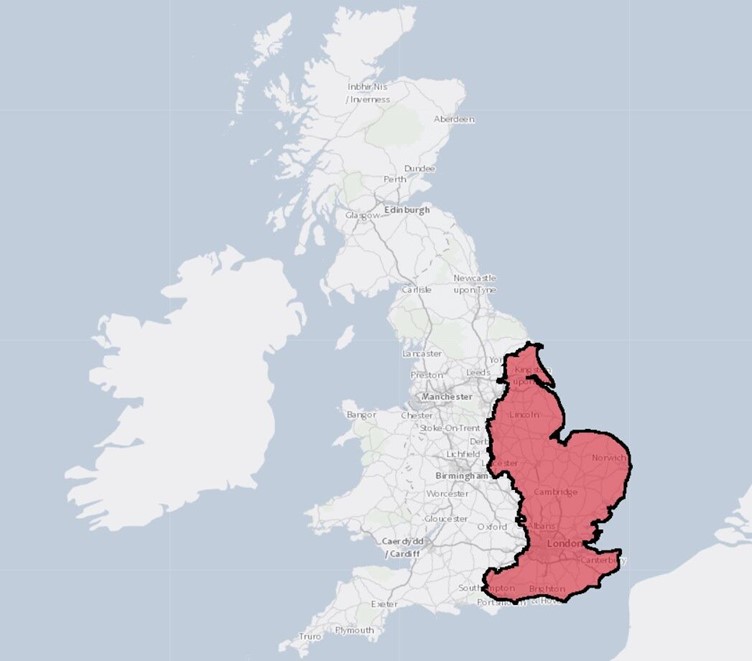
APHA current Restricted Zone ‘RZ’ is shown in red (as of 24/10/2024).
Clinical signs in cattle
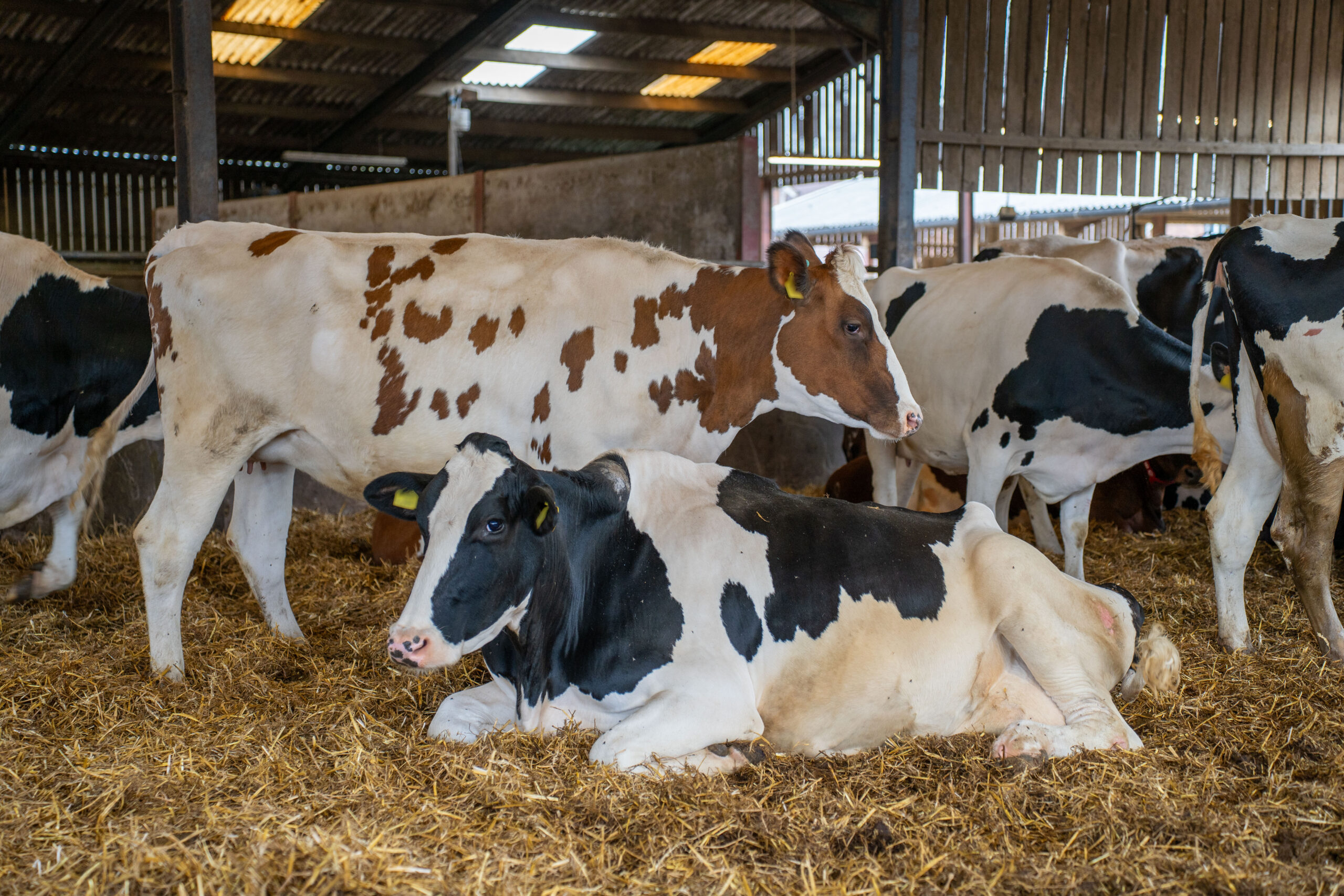
Cattle often don’t show many signs of disease, with fatigue and milk drop (1.5-2L average) being the most common. Blue Tongue looks similar to lots of other diseases, so please ring your vet if you are concerned.
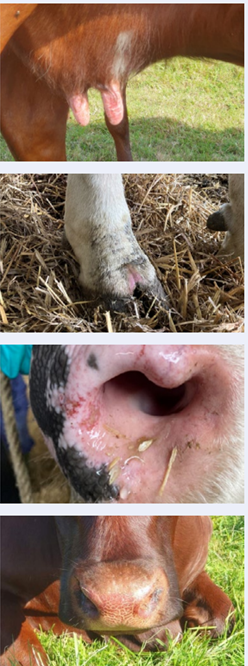
Clinical signs in calves
- abortion, foetal deformities, and stillbirths
- calves born small, weak, deformed, or blind
- death of calves within a few days of birth
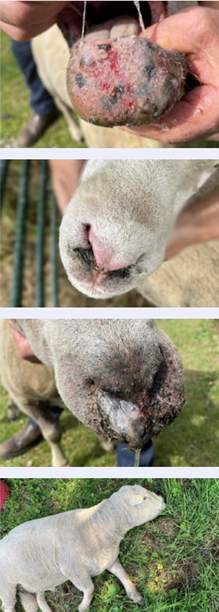
Clinical signs in sheep:
- Death
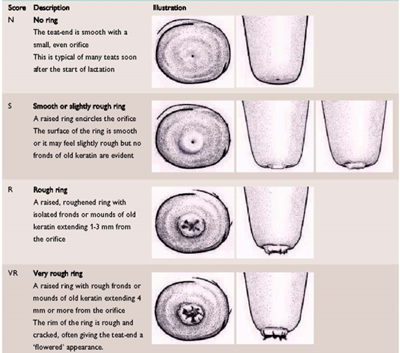
- Red/eroded teats
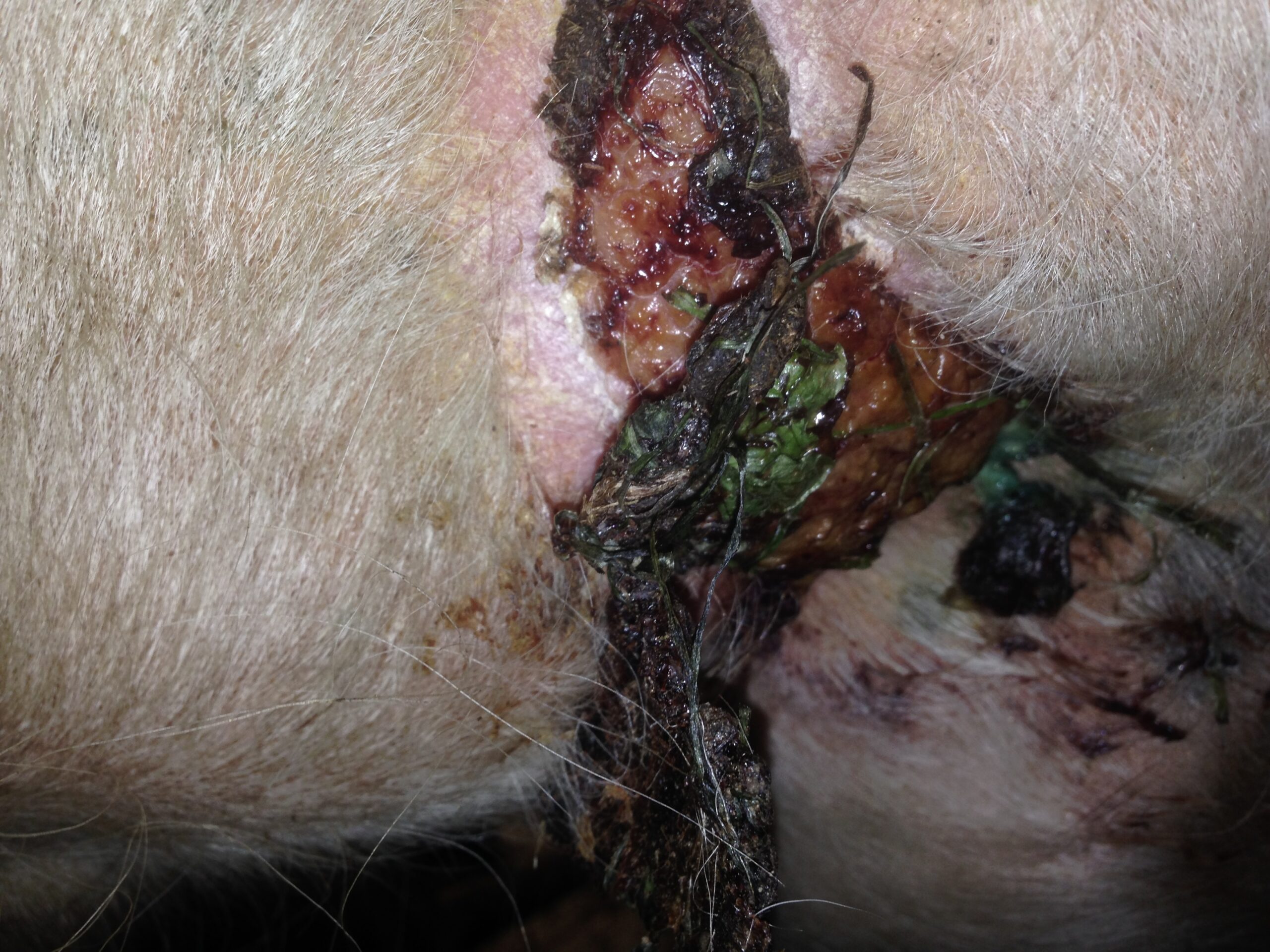
- Ulcers/Ulcerated and crusting around the nose
- inappetence and weight loss
- red skin as a result of blood collecting beneath the surface
- fever
- lameness, reluctance to move, redness in between feet
- breathing problems
- abortion, foetal deformities and stillbirths
Treatment of infected cases
Infected animals can be treated with non-steroidal anti-inflammatories (NSAIDs) and supportive care.
Control of midges
This is difficult and although there are things that can be done to reduce their spread, it is unlikely that the risk can be removed on any individual farm.
Prevention
The main preventative measure is movement controls and restrictions for susceptible livestock species in relevant areas.
- necessary movements only
- consider the location of vendors
- quarantine purchased animals
- move animals to higher, windy ground
- avoid dusk/dawn movements
- pre/post-movement testing
- Limited scientific evidence/benefit for:
- insecticide spray vehicles
- housing animals
- using midge netting
- Dipping/spraying with chemicals
Vaccination
Three vaccines have been permitted for use (England only), all vary on dosing and indication. All reduce viraemia, clinical signs and mortality but don’t prevent infection. They may cause high temperatures so fertility may be affected (male and female) and abortions could be seen. Being vaccinated does not prevent a need for testing. Since 18th October, a General License has allowed use of the vaccines on farms across England.
Testing
Premovement testing (similar to TB) is available for animals needing to move out of the RZ however it is not 100% foolproof as animals can become infected in the days between testing and results/movement. These animals are also subject to post-movement testing.
Tracing tests are also used in a similar manner to TB, for animals purchased before a Blue Tongue zone was introduced but now the farm of origin is infected.
Should we become part of the Restricted Zone (RZ), trading within the RZ will be fairly straightforward under General Licenses. Licensed red markets and slaughterhouses will be available, however, store animal trading could be more complicated if markets lie just outside zones.
For up-to-date information look at the Ruminant Health and Welfare website:


Leave A Comment