
Navel ill can lead to serious infections in newborn calves and lambs. The key to prevention? Smart management and proactive treatment at birth.
What Is Navel Ill?
To understand why good navel care is vital, it helps to remember what the navel actually is – or was.
During pregnancy, the umbilical cord connects the foetus to the placenta, allowing the transfer of nutrients and blood. At birth, the cord ruptures, leaving behind the umbilical stump (commonly called the navel).
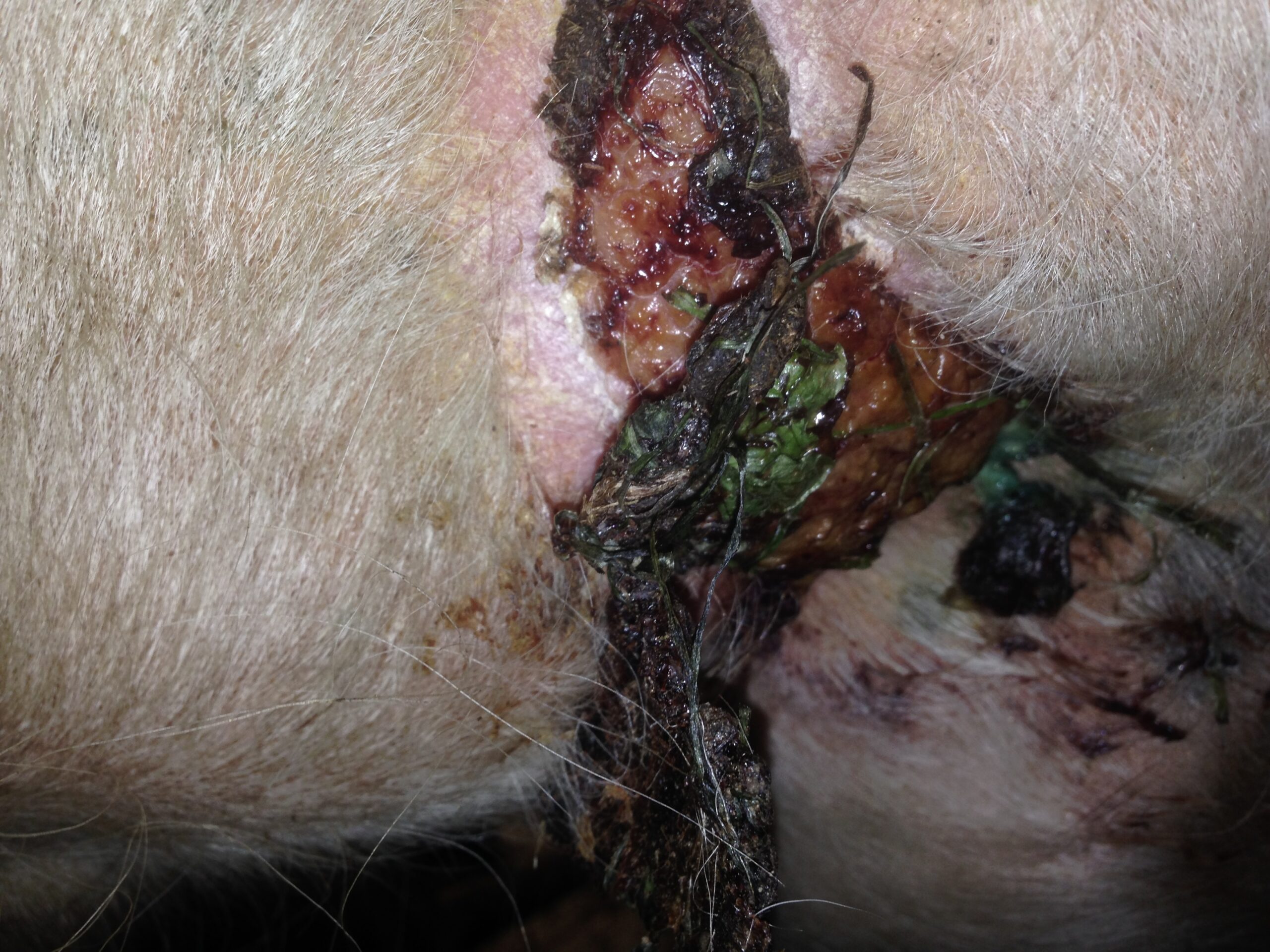
This stump is essentially an open tube before it dries and drops off; making it a direct entry point for bacteria. If pathogens enter, it can lead to navel ill (or ‘omphalitis’ to give it its technical name), an inflammation of the navel that can escalate rapidly.
While infection may stay localised, it can also spread internally, causing further issues such as peritonitis (infection of the abdomen), meningitis, pneumonia, joint ill and septicaemia.
How to Recognise Navel Ill
- Swelling, discharge, heat, or pain of the navel
- Fever (>39°C in calves, 39.5°C in lambs)
- Lethargy
- Poor appetite
Treatment
Broad spectrum antibiotics are usually required to combat the mixture of bacteria in the infection. Anti-inflammatories like meloxicam help reduce pain and inflammation. Other supportive treatment can be useful – please speak to your vet for further treatment advice.
Management for Prevention
Environment
- Keep calving/lambing areas clean, dry, and well-bedded.
- This reduces bacterial load in the environment to prevent infection through the open navel.
Colostrum
- Ensure high-quality colostrum intake within 2 hours of birth.
- Colostrum delivers essential antibodies that boost the immune system and fight infection.
Navel Dipping / Spraying
- Treat the navel ASAP after birth. The aim is to dry the navel to close the open tube, while also killing bacteria on the stump. Consider NoBacz Navel or a 3:1 mix of 10% iodine: surgical spirit. Some successes have also been seen with concentrated Copper Sulphate solution. A few seconds now can save weeks of treatment and lost performance later.
- Use a dip or spray to fully coat the navel – ensure spraying from all angles.
- Reapply if necessary, until the navel has dried fully.
NoBACZ Navel: Next-Level Navel Protection
This new product has been robustly trialled in the UK’s largest ever study of navel dressings. It’s been shown to reduce lamb mortality by 21% versus iodine meaning that 17 more lambs per 1000 born will survive. We’re hoping to have some good data on its use in calves to back this up – keep your eyes peeled!
- Disinfects and dries quickly due to high ethanol content
- Long-lasting, waterproof barrier formed from the natural polymers and metal salts
- Bright blue-green colour = easy to check coverage
- Bitter taste prevents navel sucking or licking
- Can also be used pre-tagging, docking, or castration on skin and equipment to reduce microbial levels.
Healthy navels = healthy animals.


Leave A Comment