
By Rob Hall
Resistance to anthelmintics (wormers) has been widely reported in sheep parasites in the UK and abroad. Until recently this hasn’t been a widespread problem in British cattle parasites, but resistant populations of worms are starting to emerge.
Gutworm infections are a common cause of production loss and disease in young grazing cattle, estimated to cost the UK cattle industry £74m per year. Numerous roundworm species can infect cattle and mixed infections are common. Ostertagia ostertagi and Cooperia oncophora are thought to be the most significant gutworms, but simple worm egg counts can’t tell the difference between the species so accurate surveys are unavailable.
There are five groups of wormers available to sheep farmers in the UK, grouped by the active ingredient and colour. The ‘newer’ wormer types (Groups 4 and 5, orange and purple) are only licensed in sheep currently, and should only be used as a ‘break’ product or where widespread resistance to other classes is identified. Groups 4 and 5 are not licensed in cattle – there have never been issues with wormer resistance in cattle worms, so they haven’t been needed…
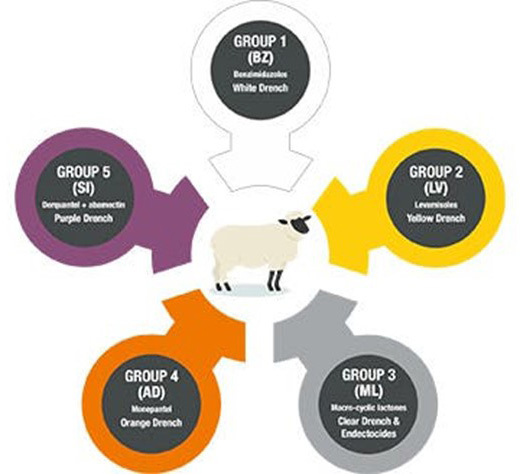
Figure 1 – Wormer Groups available for sheep (credit – Elanco)
A recently published study by the APHA, the Moredun Institute and Edinburgh University has shone more light onto the situation. They used faecal samples from first season grazing cattle in England and Wales in 2022 and 2023, including from several herds in our area. Worm egg counts were performed, and when gutworms were found their DNA was sequenced to identify sections of the genetic code which would give the worms resistance to benzimidazole (BZ) wormers.
Resistance to the macrocyclic lactone (ML) group (such as ivermectin) is already thought to be quite widespread in Cooperia oncophora and present in Dictyocaulus viviparus (lungworm) in UK herds. Benzimidazole (BZ) resistance has previously been confirmed in the more pathogenic Ostertagia ostertagi in a single herd.
The “What Worms” study found gutworms carrying genetic mutations for BZ wormer resistance in all herd types and all regions of England and Wales. Overall, BZ resistant genotypes were detected in roundworm species from 9/49 herds (18%).
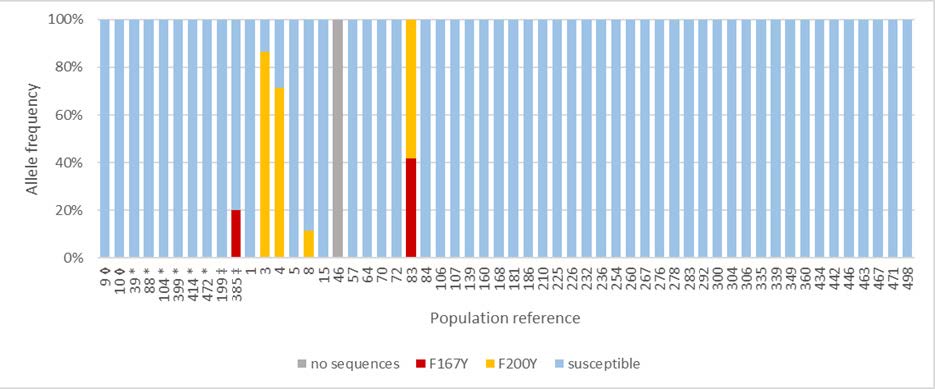
Figure 2 – Proportion of the Ostertagia ostertagi eggs which carried resistance genes on each farm. Resistance genes shown in yellow and red, with susceptible worms shown in light blue
Some herds had quite high proportions of resistant worms, which would increase the risk that BZ wormers would fail to kill off worm burdens on those farms. Concerningly, resistance-associated mutations were found in the most pathogenic gastrointestinal roundworm species (Ostertagia ostertagi) in five herds (5/48 = 10%), as shown in figure 2. On farm 83 for example, all the Ostertagia eggs carried DNA to give the worms resistance.
The warning from this project is that increased BZ use in future may make resistance more widespread, potentially leading to more treatment failures. However, since BZ resistance is still at a relatively early stage in UK cattle, there are currently opportunities to slow its progression by adopting more sustainable roundworm control strategies and considering appropriate biosecurity when undertaking cattle movements.
We encourage you to discuss your individual situation with your farm vet and other advisers, to devise appropriate, farm-specific roundworm control and biosecurity strategies.
The researchers extend their thanks to those LLM farmers who contributed muck samples to the project.



Leave A Comment