
The National Johne’s Management Plan (NJMP) Phase III kicks off on 31st March 2025, continuing efforts to control Johne’s disease in dairy herds across the UK. Building on previous phases, the scheme focuses on sustained disease control, improved biosecurity, and herd-level risk assessment to minimize the impact of Johne’s on productivity and profitability.
Key Features of Phase III:
- Ongoing Risk Assessment & Veterinary Advice
- Every dairy farmer must conduct an annual veterinary review to assess Johne’s risks and implement a tailored control plan.
- This includes working with your accredited vet to identify risk factors such as calf management, manure handling, and biosecurity gaps.
- Six Control Strategies
- With your vet, you will choose one of six control strategies, ranging from enhanced biosecurity to test-and-cull approaches.
- These ‘control strategies’ are just a label given to summarise the more in-depth plan which you will have in place
- This flexible framework allows you to choose a plan suited to your herd size, disease risk, and business goals.
- Continued Testing & Surveillance
- Regular testing helps detect infected cows early, reducing the spread within herds.
- This phase increases the testing requirements, with a minimum of 60 randomly-tested cows being tested, however, we continue to recommend whole herd milk testing as the most appropriate method for most farms.
- This is an increase from a 30-cow targeted screen in previous phases.
- As part of the testing, a Johnes Control Index (JCI) be calculated as a benchmarkable index of overall disease level.
- Industry-Wide Commitment
- Support from milk buyers and industry bodies ensures widespread participation and accountability, with most milk buyers requiring a signed NJMP declaration.
- A new declaration comes into place from 31st March, however old declarations continue to be valid for 12 months.
- There are also plans for a national database to record and track herds’ average test value (ATV), percentage incidence, and other key drivers of infection within herds.
What is the JCI?
- The Johne’s Control Index is simply the average of all milk ELISA tests done on a herd within a year. In other words, the average ATV!
- JCI is easy to calculate, and straightforward to benchmark, while reflecting the overall disease burden of a herd.
- Low levels of grumbling Johnes disease will increase the JCI of your herd, however retaining cows with very high ELISA test scores will have the biggest impact.
- A herd’s JCI will therefore fall when ‘priority culls’ are removed – these are cows with a test value ≥100 or two consecutive tests ≥60.
- Priority culls are cows most likely to be shedding high amounts of Johne’s bacteria in their faeces, so represent the largest disease risk, and where culling controls should be focussed.
- The good news is that the national JCI has already decreased from 10.0 in 2015 to 6.6 in 2023, with 43.6% of herds already score below the 5.5 target!
Why It Matters
- Johne’s disease leads to reduced milk yields, poor fertility, and premature culling, affecting farm profitability.
- Proactive disease management reduces long-term costs and improves herd health, helping to maintain a sustainable and profitable dairy business.
Take Action: Talk to your vet about your farm’s Johne’s disease risk and ensure compliance with NJMP Phase III for a healthier herd and stronger business.
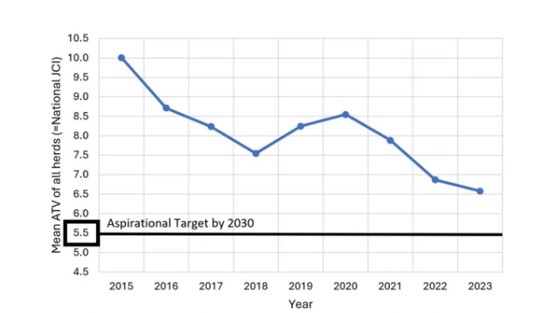
Figure 1 – The national JCI has been falling over the past decade (Source: BCVA Cattle Quarterly)





Leave A Comment