
I recently attended the National Youngstock Conference at Harper Adams (lovely to see some of you there). On the day, there were some conflicting views presented on the best way to feed calves – a higher milk diet with a gradual increase onto concentrate or a higher concentrate and forage diet with less milk. We wanted to address this as conflicting advice is rarely useful!
In reality, there are many ways to rear calves and different methods suit different farmers, calves and set-ups.
For example, dairy heifer calves are often managed very differently to dairy X beef calves as the purpose they serve is different. Heifers need to have a long and productive life in the herd with good mammary development to ensure good future milk production whereas beef calves need to have a consistent DLWG to ensure they finish at the right weight at the right time.
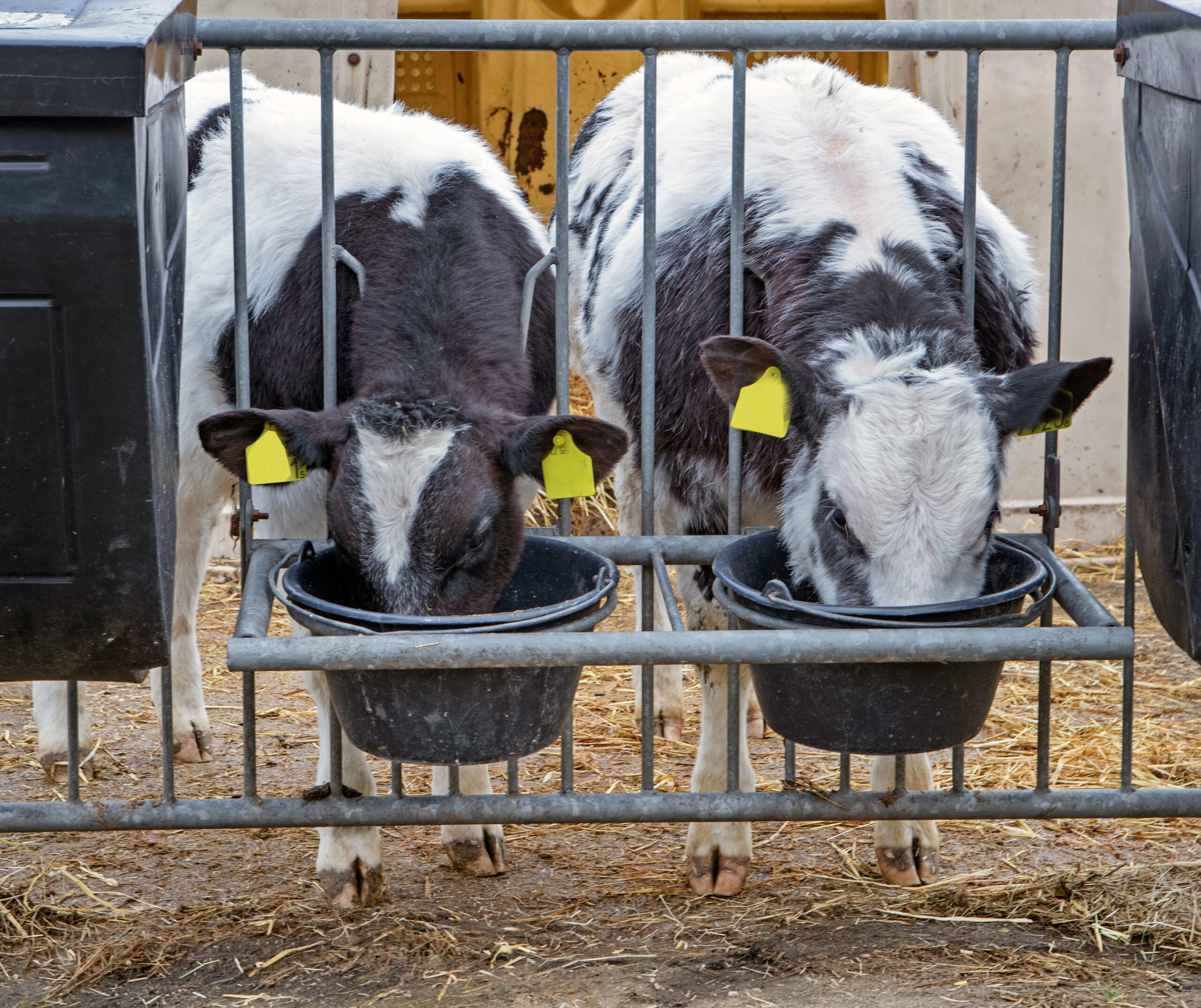
A “high milk” diet would be at least 8L a day of good quality, 100% dairy protein milk replacer (900g-1.2kg of powder) or whole milk with small amounts of concentrates and forage fed alongside which gradually increases as the calf gets towards weaning (Figure 1). There could be a whole separate article on milk replacers but to feed high volumes, the quality and the composition must be good enough otherwise calves may scour as they can’t digest plant protein (which may be present in poorer powders) at an early age.
A lower milk diet that encourages more concentrate intake would feed less milk replacer (~700g/day) which in turn makes the calf hungrier and encourages more starter and forage intake earlier in life.
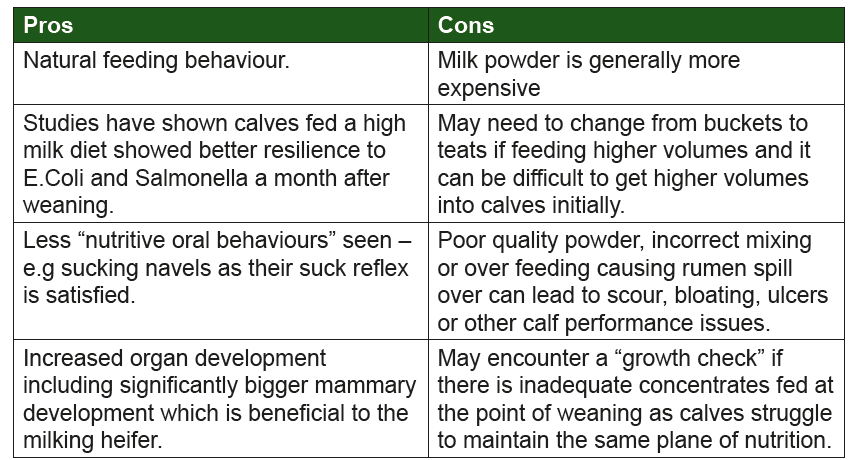
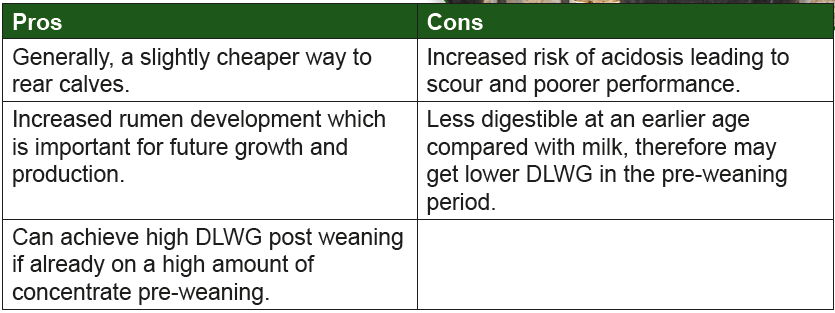
There are pros and cons to both systems – see the tables below.
To summarise, there are many ways to feed calves and there isn’t necessarily a right or wrong way if your calves are performing well.
However, if you think the way your calves are fed may need tweaking or have concerns about performance please get in touch with one of us. We currently have funding available (Animal health and welfare pathway in England and Farming connect in Wales) where we can review your system to see if there are any changes we can make to improve performance.
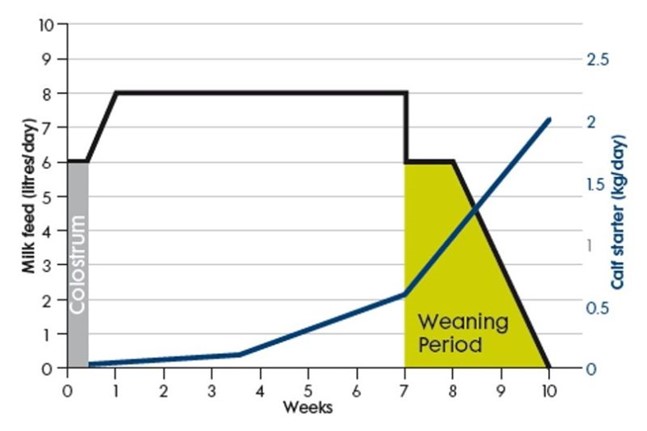
A “high milk” diet would be at least 8L a day of good quality, 100% dairy protein milk replacer (900g-1.2kg of powder) or whole milk with small amounts of concentrates and forage fed alongside which gradually increases as the calf gets towards weaning (Figure 1). There could be a whole separate article on milk replacers but to feed high volumes, the quality and the composition must be good enough otherwise calves may scour as they can’t digest plant protein (which may be present in poorer powders) at an early age.
A lower milk diet that encourages more concentrate intake would feed less milk replacer (~700g/day) which in turn makes the calf hungrier and encourages more starter and forage intake earlier in life.
There are pros and cons to both systems – see the tables below.
High Milk Diet
High Carbohydrate / Less Milk Diet
To summarise, there are many ways to feed calves and there isn’t necessarily a right or wrong way if your calves are performing well.
However, if you think the way your calves are fed may need tweaking or have concerns about performance please get in touch with one of us. We currently have funding available (Animal health and welfare pathway in England and Farming connect in Wales) where we can review your system to see if there are any changes we can make to improve performance.




Leave A Comment