Youngstock are the foundation of any herd. Management of calves is crucial in order to give them the best start. Identifying youngstock disease symptoms and how best to prevent recurrence is critical. Here we give you some youngstock management and disease advice.
Bluetongue Virus Serotype 3 (BTV 3) in the UK and Europe: A Growing Concern

Bluetongue virus serotype 3 (BTV 3) has recently caused significant disruption to ruminant health and welfare in both the UK and Europe. Over the past 18 months, the UK has confirmed 247 cases of BTV 3, with the majority concentrated within the restriction zone, which currently affects the East and […]

2025-04-03T15:54:14+00:00April 1st, 2025|Beef, Dairy, Infectious Diseases, News, Sheep, Youngstock|

How important are the Q’s of colostrum?

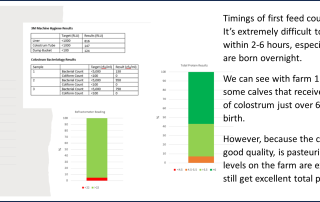
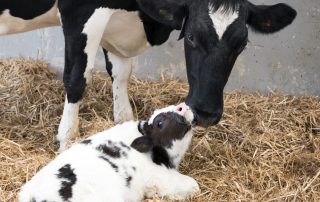
We recently ran a calf colostrum project in Lancashire. The main aim of the project was to highlight how important the Q’s of colostrum really are for the neonatal calf.

Overview of the Project:

  • 5 Farms
  • 1 month project
  • Measuring colostrum quality, quantity, and how quickly it was fed to our calves.
  • Quantifying how good […]
2025-04-03T16:01:43+00:00March 10th, 2025|Youngstock|

Spring is on it’s way! Claire gives food for thought…

Although it may currently feel a million miles away from turnout, it is quickly creeping up on us!
Now is the time to start considering parasite control strategies for the year to come, particularly with regards to youngstock. Our first drop of Huskvac, a lungworm vaccine will be landing at the […]

2025-02-06T13:09:18+00:00February 6th, 2025|Beef, Dairy, Sheep, Youngstock|

Blue Tongue BTV-3 Update

Bluetongue (BTV) is a viral disease transmitted by biting midges, which affects all ruminants (e.g. sheep, cattle, goats and deer) and camelids (e.g. llama and alpaca). BTV is mainly spread by infected adult midges biting an animal susceptible to the disease.

An uninfected adult midge bites an infected ruminant animal […]

2024-11-01T16:05:26+00:00November 1st, 2024|Beef, Dairy, Sheep, Youngstock|

Bloat In Calves

Bloat is caused by a build-up of gas in the abdomen that is unable to escape. There are two main types of bloats in calves; abomasal bloat and ruminal bloat. Feeding consistency, colostrum management and good hygiene of feeding equipment are the main ways to avoid cases of bloat.

Bloat […]

2024-07-03T11:03:05+00:00July 3rd, 2024|Youngstock|

The crucial role of ventilation for calf health

As you will know, the health and well-being of calves are paramount to the success of a dairy and beef operation. While factors such as nutrition and housing play crucial roles, one often underestimated aspect that significantly impacts calf health is proper ventilation.

Optimal Air Quality:

Adequate ventilation is essential […]

2023-09-18T15:22:06+00:00September 18th, 2023|Beef, Dairy, Youngstock|

Conflicting calf feeding advice unwrapped

I recently attended the National Youngstock Conference at Harper Adams (lovely to see some of you there). On the day, there were some conflicting views presented on the best way to feed calves – a higher milk diet with a gradual increase onto concentrate or a higher concentrate and forage […]

2023-09-20T10:51:50+00:00September 18th, 2023|Dairy, Management, Youngstock|

“The Werombi herd” trials and tales from new entrants

I’d like to say ‘oh, what a difference a year makes’ but with another drought potentially on the horizon, perhaps less has changed since 2022 than I’d hoped. One thing is for sure, the majority of the suckler cows are finally meeting their Body Condition Score (BCS) targets! After a […]

2023-06-13T13:24:03+00:00June 13th, 2023|Beef, Management, Youngstock|
Go to Top